
Home
Please, do not visit the beaches near Kavala City!
- Details
- Written by: Gianna Esquivel
- Hits: 9706
Greece is such a nice country to spend as much time as you can. No matter where in Greece you are, you always will find a nice spot to eat, a cozy place to stay, a beautiful hidden beach to enjoy, and a cool Greek to chat with. Exploring Kavala City has been very pleasant and exciting! Now, we are curious about its surroundings; the beaches near Kavala City. We decided to pack and go again to discover what else can we enjoy.
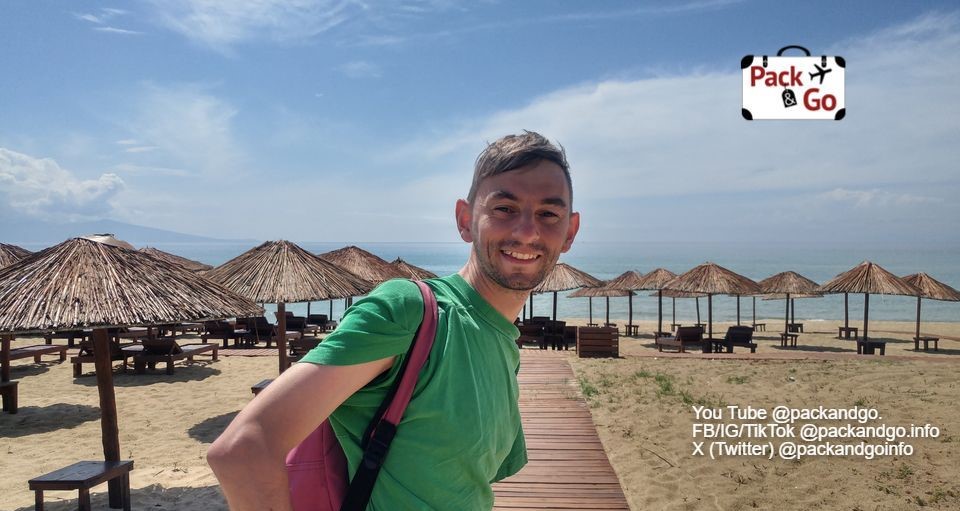
If you spot Kavala on a map, it is not hard to realize that is mostly surrounded by beaches and small towns. This is so far one of the most relaxing travels we have made and we don’t mind at all! M and I thought: “If the challenge here is to move from beach to beach every day, perfect! We can do that!” hahaha. We are the type of travelers who instead of taking it easy, walk to death daily to explore as much as possible. Usually, we finish very tired every day. Perhaps, for the first time, we will rest during a trip so we won’t need a break after the holidays! It gets a vicious circle, guys hahaha
Where is Palio?
Palio’s full name is Palio Tsifliki. Get your map and you will see Palio in northeastern Greece, along the coastline of the beautiful Aegean Sea. It is about 9 kilometers west of Kavala City center. Driving (Via EO2, Greek National Road 2), it will take you around 15 minutes to reach it, based on Google’s calculation.
The Via EO2, Greek National Road 2 is a very long road located in the regions of West, Central, and East Macedonia, and Thrace. It connects the Albanian border close to Florina with the Turkish border close to Alexandroupoli. Just following this road could be a cool adventure full of nice places to enjoy.
We have been very lucky because we haven’t found heavy traffic (May 2023). Driving around Northern Greece has been a pleasant experience. The fact that is not high season yet must be a reason. With all the accommodation choices we have seen around, for sure during Summer, traffic increases considerably.
You also can take a KTEL bus from Kavala to Palio Tsifliki. It departs from the Kavala bus station and the fee is around two euro.
What to do in Palio?
Today, we did not drive too long. It only took us 9 kilometers and 15 minutes to reach this small western suburb of Kavala. Palio is a popular recommendation because of its beautiful beaches, clear waters, and chill-out atmosphere. It is a nice destination enjoyed by tourists and locals. For Greeks living in Kavala City, Palio is a nice escape when they want a break from the city's buzz. For tourists, Palio is a quiet and comfortable extension of soft and sandy beaches that gives the perfect excuse to stretch your holidays and enjoy another angle of the Aegean Sea. The beaches in Northern Greece are amazing!
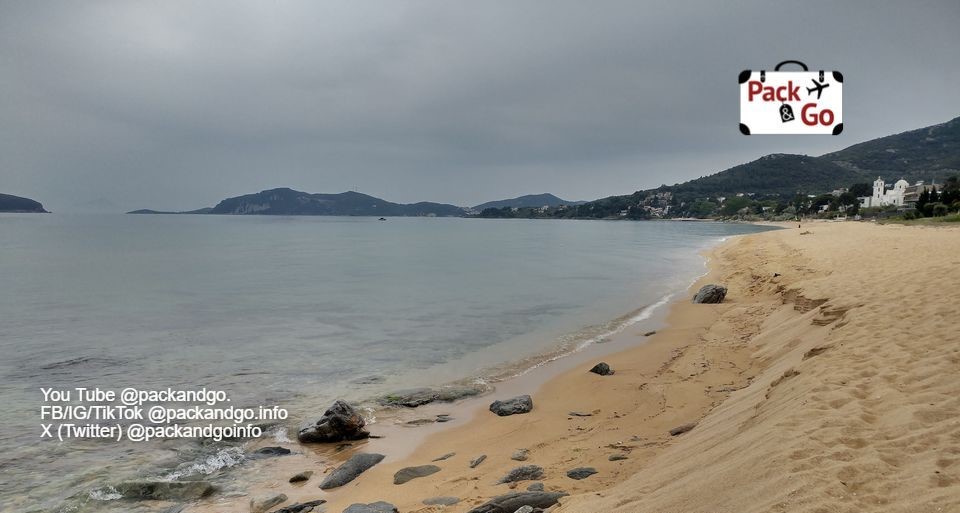
Don’t expect a common and massive resort because Palio is not that. It is more like a cute village and it has everything you need to have a nice and relaxing staying. Palio does not have a typical town design. You won’t find a center surrounded by streets. Palio’s design has been defined by the houses, hotels, guesthouses, villas, taverns, bakeries, mini markets, pharmacies, and shops that have grown on both sides of the main road that passes through the suburb (EO2 road), all along the coast.
Relaxation and beach exploration
What to do in Palio? This is our main recommendation: explore the beautiful coast and relax! Beach sand in Palio is soft and the water is shallow around the shore. There are some areas where the beach zone is small or narrow, but we always have found space for our umbrellas. Locals told us that in the high season, several bars are installed on the beach, so a part of the beach space is taken by the sunbeds and parasols offered by these bars or the beachfront hotels to tourists. Right now (May 2023), there are no such amenities so the complete beach is for a couple of other tourists, us, and our umbrellas, and that is fantastic, guys!
You can walk on the beach until you find your perfect spot. Then, it is up to you, to swim, sunbathe, enjoy paddle boarding or snorkeling. Maybe take a break in your accommodation, treat yourself with Greek food, coffee (cold or hot), a glass of Tsipouro or Ouzo (nice Greek beverages), and get back to the beach to enjoy a great and romantic sunset.
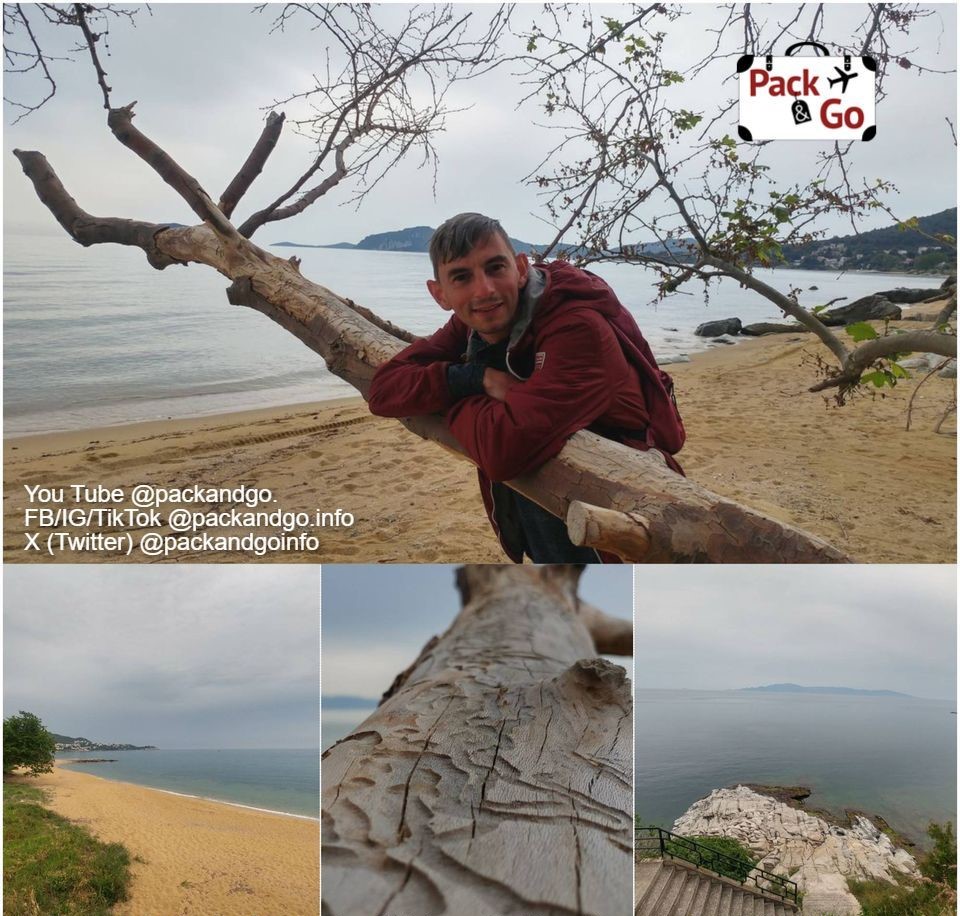
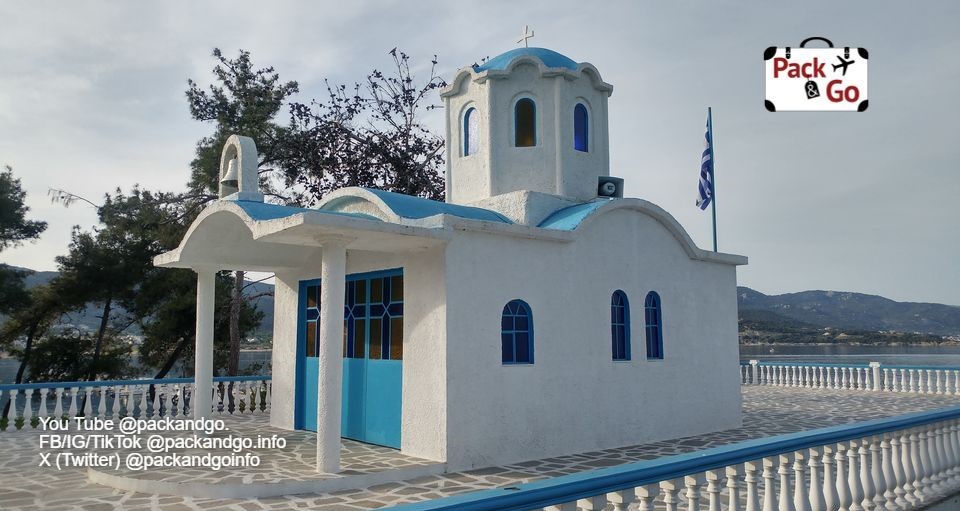
Palio exploration can lead you from the beach (the best place to be) to the small background of the suburb where you can walk and find different taverns, a little playground, and the Holy Church of the Assumption. No big sightseeing places within walking distance in Palio, but having that sea, who needs more? We are on one of the best beaches in Northern Greece and crowd-free! Priceless!
How long to stay in Palio?
If you want only to see what’s Palio about, a couple of days are enough. If you have more time, a week here can recharge you to get back home and retake your routine.
| Follow PackAndGo.info at: | |
| YouTube | @packandgo. |
| @packandgo.info | |
| X | @packandgoinfo |
| Bluesky | @packandgo.bsky.social |
| @packandgo.info | |
| TikTok | @packandgo.info |
Where is Nea Iraklitsa?
Let’s go back to your map. Nea Iraklitsa is about 16 kilometers west of Kavala City center. Driving (Via EO2, Greek National Road 2) will take you from 20 to 25 minutes, based on Google’s calculation. If you drive from Palio to Nea Iraklitsa as we did, it takes only 10 minutes and 6.6 kilometers (said Google).
You also can take a KTEL bus from Kavala to Nea Iraklitsa. It departs from the Kavala bus station and the fee is around three euro.
What to do in Nea Iraklitsa?
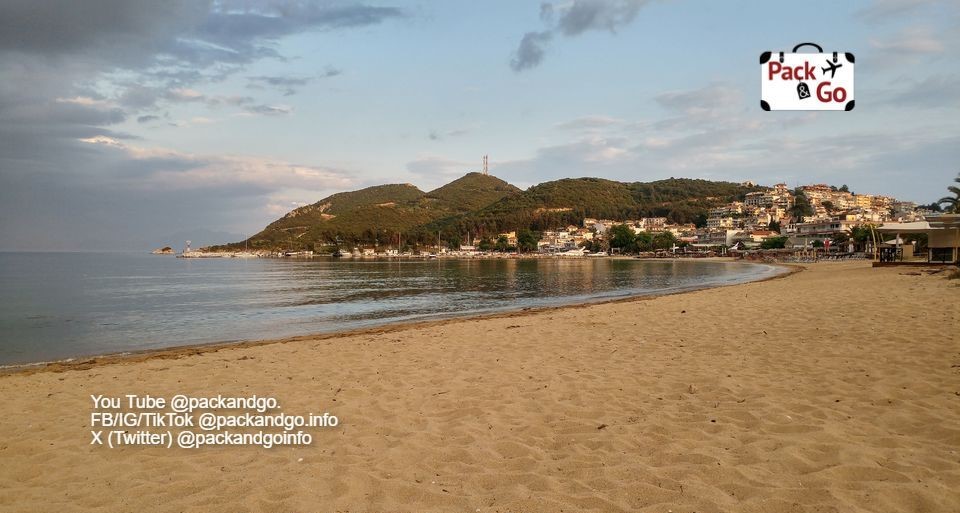
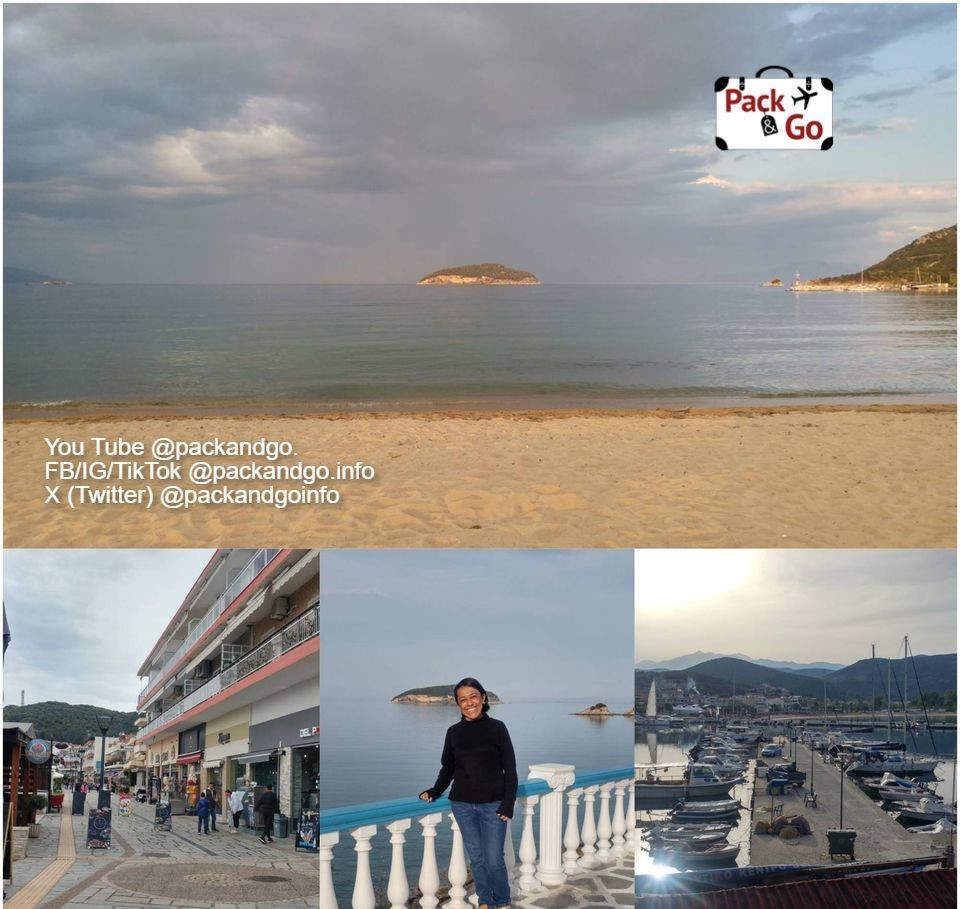
Nea Iraklitsa is another beautiful gem on the Aegean seaside. Its design is different from Palio’s. It is a small town but you can spend complete days just walking and exploring its bay, the small port for fishing boats and yachts, taverns, cafes, and bakeries. Accommodation offers you many different options and most of them are very close to the beach.
Nea Iraklitsa exploration
What to do in Nea Iraklitsa? You have two areas to explore in Nea Iraklitsa, the village where locals live, its center, and picturesque streets built on a hill overlooking the sea. The tourist area all along the beach its multiple villas, hotels, guesthouses, bars, supermarkets, and taverns. Besides the main road, there is a nice promenade where people can calmly exercise and walk while enjoying the landscape.
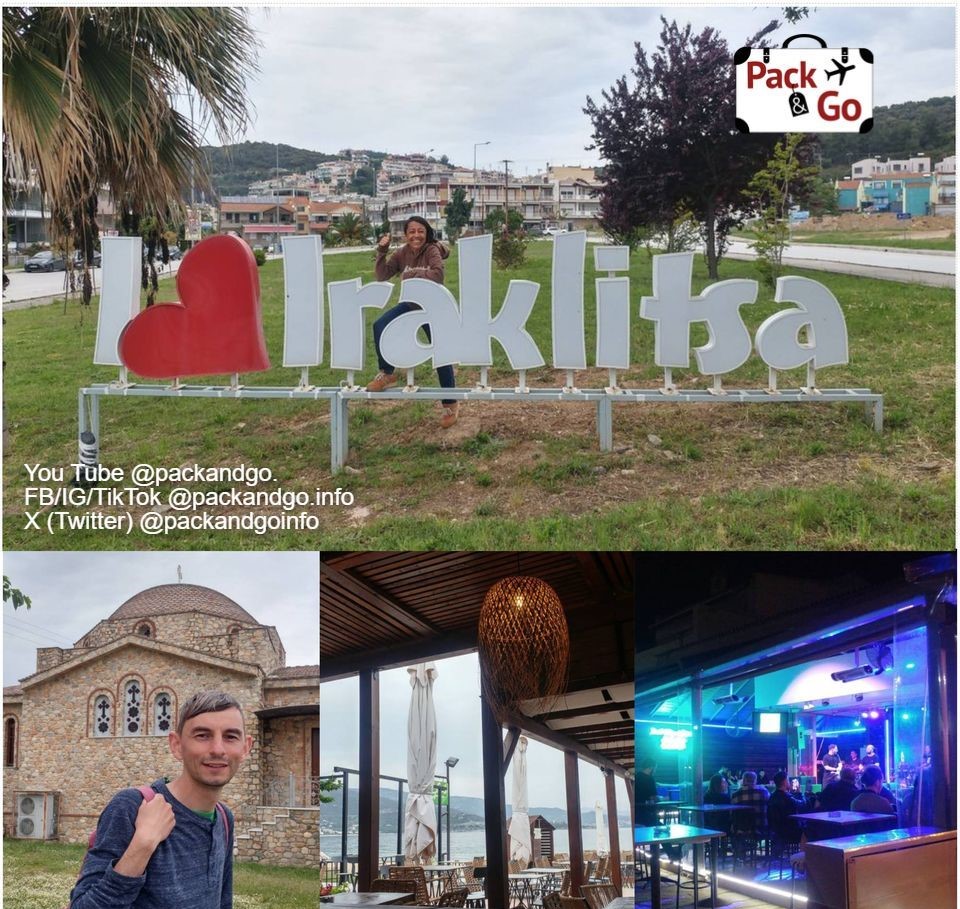
It is a very comfortable and relaxing spot where the variety of restaurants, bars, and coffee places is bigger than in Palio. No matter the short distance between these two coastal spots, the landscape is different. Yes, you have again stunning beaches, a lovely and relaxing atmosphere, and impressive clear waters, but you won’t feel you are staying in another exact Palio’s copy. You have to explore Nea Iraklitsa in the morning, midday, and during the evening. It is in general a very calm and relaxing place, however, in the evenings it also offers some party vibes. Live music, Greek and Turkish singers, and their danceable or romantic rhythms set the tone for those who also want to move their bodies and enjoy the night. Still, it never reaches the buzz and alcoholic party levels of those massive resorts we all for sure have visited. It is very enjoyable during the day and night!
Beach relaxation
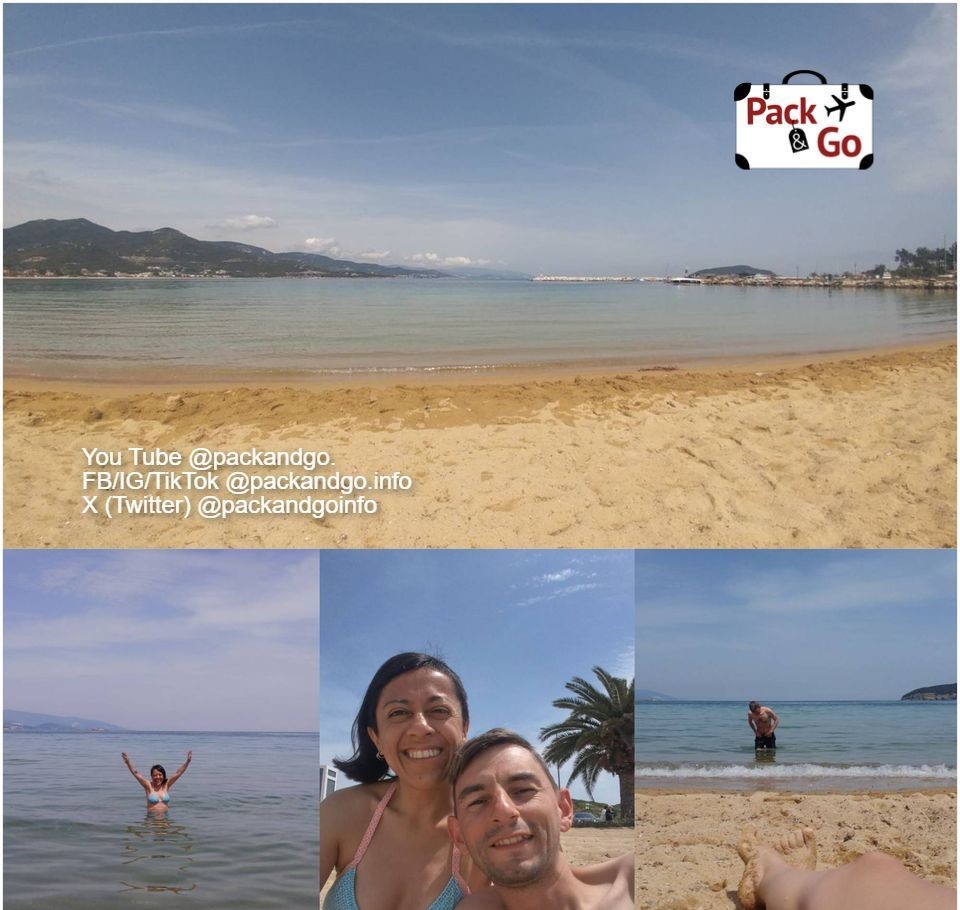
Take your bathing suit, sunblock, sunglasses, and sandals and drop somewhere on the beach just to take some sun, a nap, and swim as long as you feel like in the awesome Aegean Sea. During our stay, we never saw strong currents or waves. The sea is shallow so it feels pretty safe to swim there. Psatha and Remvi are two small beaches you should visit behind the port. You can rent a sunbed or it can be provided by your accommodation free of an extra charge, be on a terrace of a bar, or take a walk on the sandy beaches to have a great day. All your senses will be indulged with the natural beauty of Nea Iraklitsa, one of the best beaches in Northern Greece!
Fishing
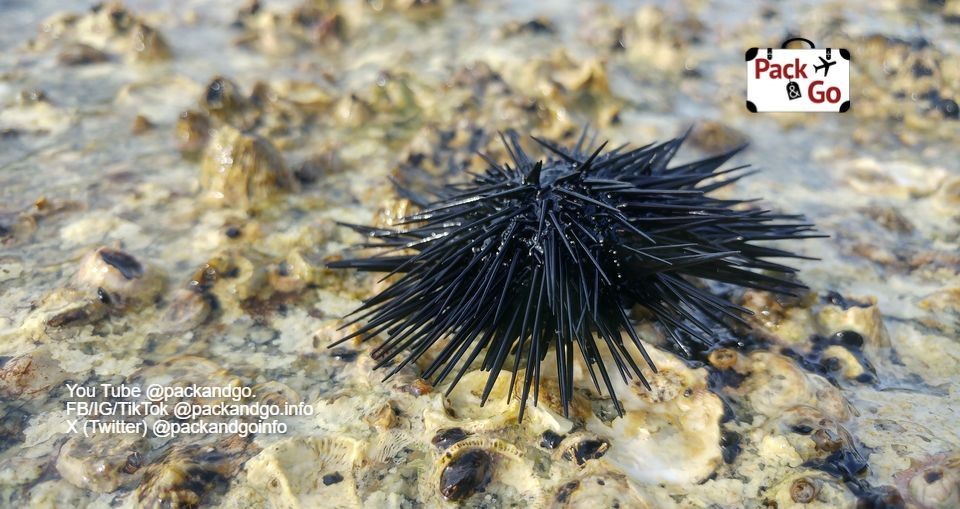
Nea Iraklitsa is another great place for fishing enthusiasts. Take your equipment and pick your favorite spot for fishing while enjoying the very calm dance of the waters. There is a chance to join local fishermen or rent a fishing boat to have the experience and catch your dinner!
Camping
In Northern Greece is not hard to find campsites to park your vehicle (van, camper, or regular car) and stay there without worries, having access to services like showers, electricity, or Internet, and sharing time and conversations with other visitors. In Nea Iraklitsa, the campsite could not be better. It is exactly in front of the beach. Besides, there is a car park (free, at least during the low season) where you can comfortably park your vehicle without any worry and enjoy the whole day, if you want, on the beach. We found out a big community of van life fans. They gather both, at the campsite and the car park, especially during the evenings. The environment is very nice. Tourists mostly from Polland, different Bulgarian cities (Varna, Sofia, Plovdiv, Kardzhali, etc.), and Turkiye were having a great time while preparing the grill, cooking, and watching the sunset all together. Some were cooking the fish they fished so fresh food from the sea to their plates, cooking in front of the beach. That is life!
Water Sports
During the high season, the offer of more services like snorkeling, windsurfing, jet skiing, or paddleboarding is added to the variety of things to do in Nea Iraklitsa. It is not hard to get such services because they are offered by the vendors on the beach or even at your accommodation.
Boat tours
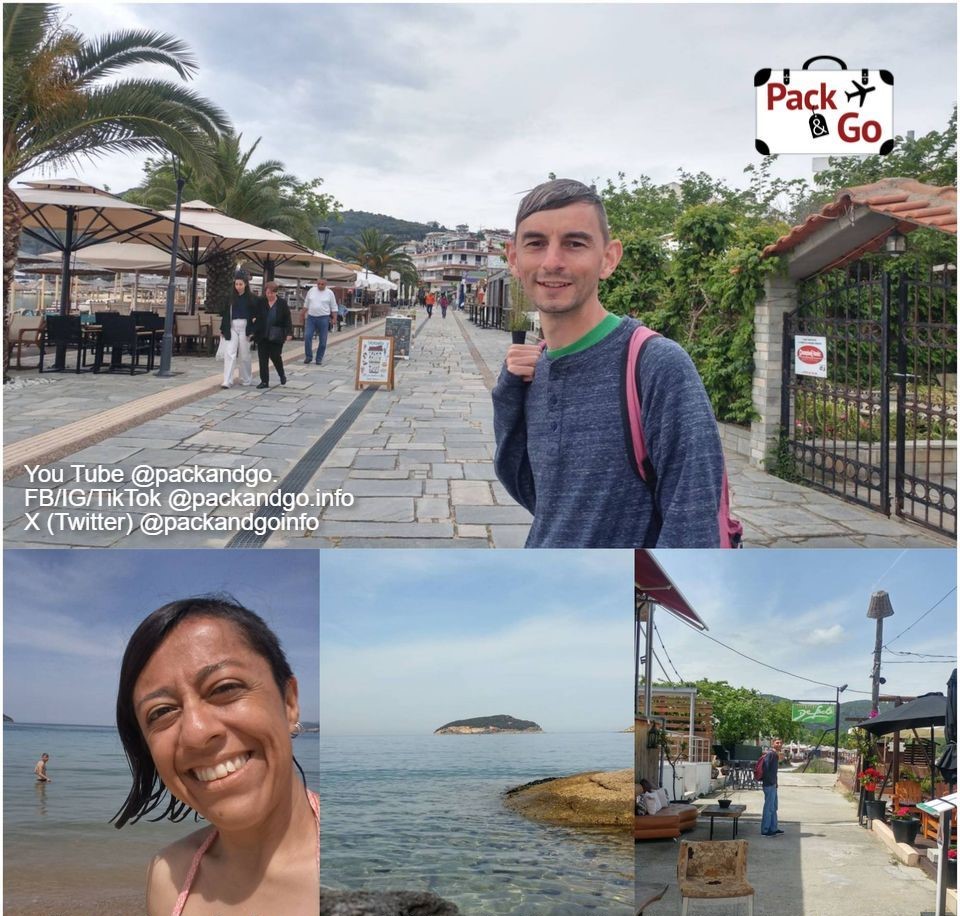
The small but active port of Nea Iraklitsa is the place to hire a boat for you to drive or pay for a boat tour. On such a tour, you can explore nearby islands or hidden coves, and enjoy from a boat the beauty of the Aegean Sea.
Eating Greek cuisine
We won’t be repetitive. Just remember Northern Greece and its beautiful coast gives you a priceless chance to try fresh seafood and traditional Greek dishes. In Nea Iraklitsa we tried some of our favorite souvlaki and moussaka.
How long to stay in Nea Iraklitsa?
From a weekend to a week and even more, could be ok. Here you can combine days of doing nothing more than swimming and enjoying the beach, with days of more activity because Nea Iraklitsa’s offer is bigger.
Where is Nea Peramos?
Nea Peramos is located 22 km (27 minutes by driving) west of Kavala City center. It is 3.5 km or 7 minutes away from Nea Iraklitsa. You can reach it by taking the via EO2.
You also can take a KTEL bus from Kavala to Nea Peramos. It departs from the Kavala bus station and the fee is around four euro.
What to do in Nea Peramos?
Yes, we only drove 3.5 km hahaha. Exploring Greece at this pace can take you a life, but we don’t mind! You will agree when you come, you will see.
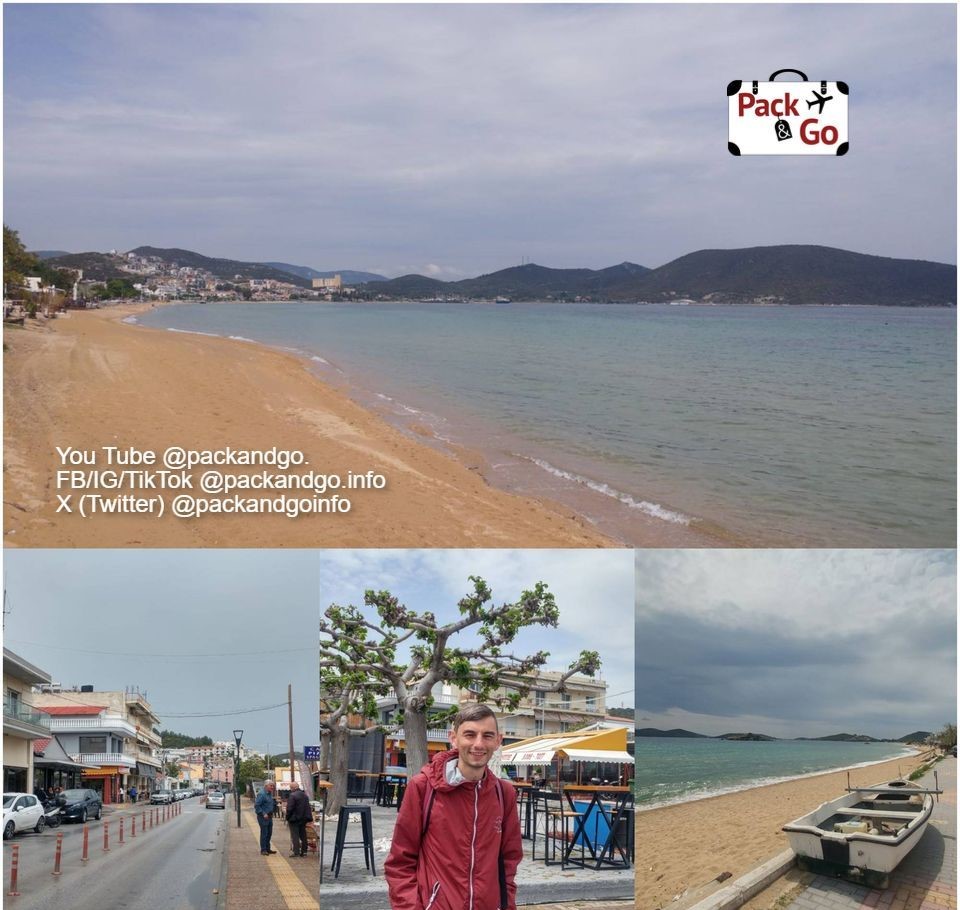
Nea Peramos is another charming coastal town in northern Greece, well known for its scenic views and of course, beautiful beaches. Visiting Greece is to step into ancient history and cultural and archeological treasures. You can learn a lot here and visit many museums or archeological zones. But you also can have very relaxing holidays just enjoying the marvelous beaches all around the country and its many islands. You can also combine the two experiences, so Greece gives you plenty of choices to stay longer or get back several times.
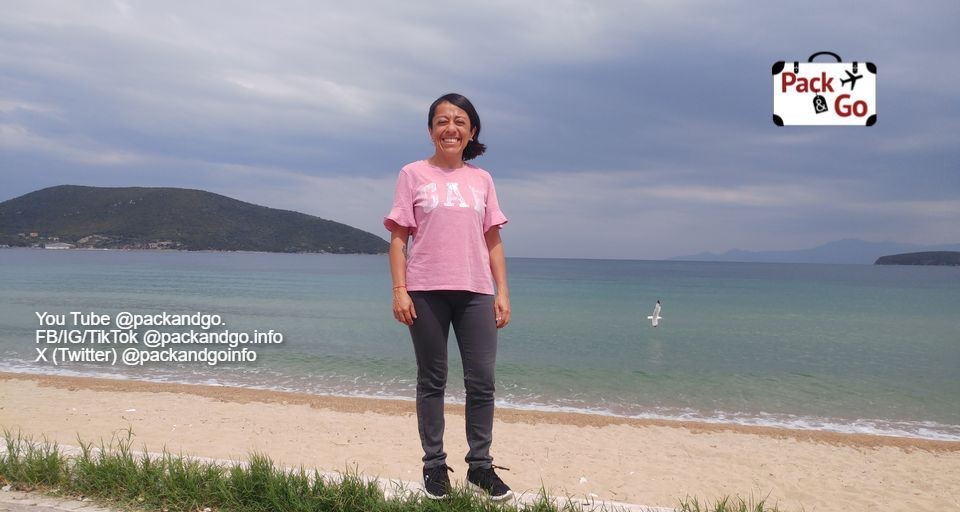
This town’s design is similar to Nea Iraklitsa’s. The main road (via EO2) passes exactly in front of the beach and the shops, hotels, and taverns, but there is a long nice promenade for you to walk without worries and be even closer to the Aegean Sea. Nea Peramos is a town where many Greeks live, work, and study daily. They share their town with the tourists that every year come here to have fun and relaxing time. After spending more than a few days there, you can realize that many businesses are run by families, people know each other, and this makes a cozy, familiar, quiet, and safe environment.
Nea Peramos has everything you need to stay there. Accommodation (different sizes of rental departments, hotels, and villas), restaurants, taverns, shops, and some of the best beaches in Northern Greece!
What to do in Nea Peramos?
Beach relaxation
You know, swimming, sunbathing while napping, reading a book, or chatting with locals.
Water Sports
If you want more exciting experiences, practice snorkeling, windsurfing, jet skiing, or paddleboarding. A note for you, snorkeling is very easy here. You can directly jump into the water only wearing your snorkel mask and you will see many cool and colorful fish thanks to the sea’s clarity. They swim just next to you and it is beautiful! But ok, a paid service can take you deeper into a beautiful reef.
Boat tours
People like a lot to rent and drive boats. This choice is available or you also can be only a passenger on a tour.
Eating and drinking Greek stuff
We ate some of our favorite gyros here in Nea Peramos in a small, local, and full of nice food and people place. Try different foods and places until you find your favorite. Money and time spent on trying local dishes is always worth it!
Sunset spotting
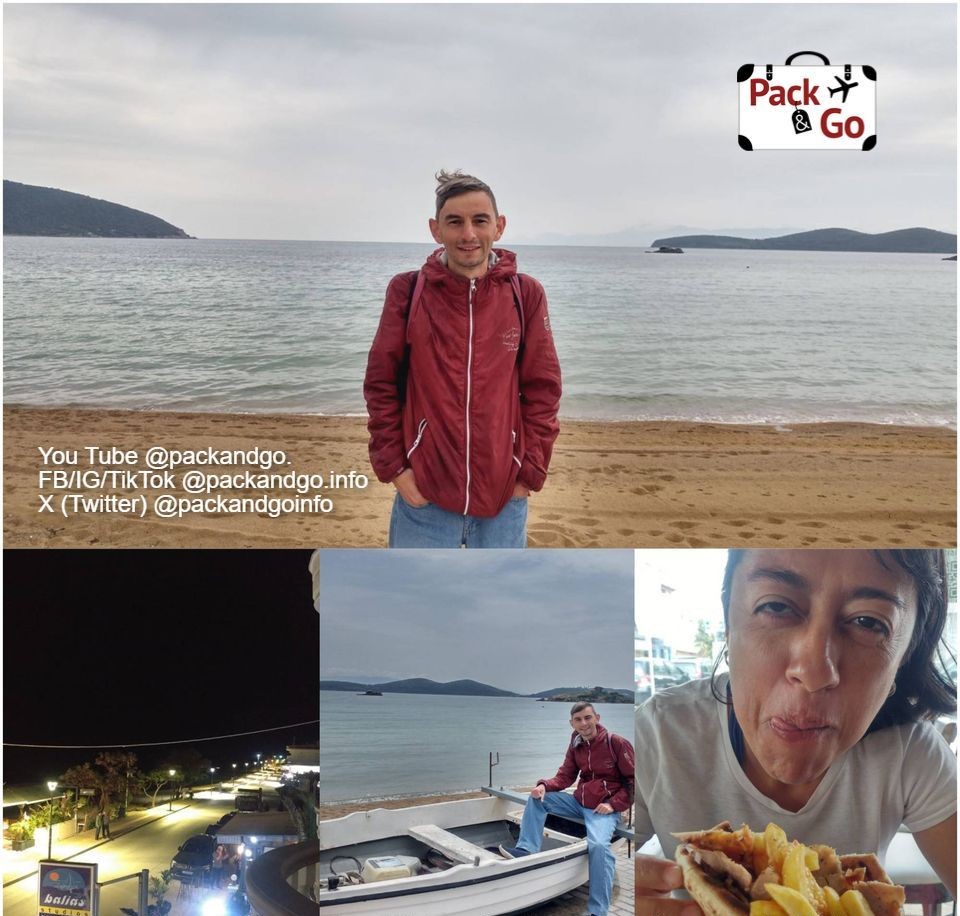
This is one of our favorite activities so far. We stayed in a very comfortable apartment with a balcony. The place was in front of the beach. It was 40 EURO per night (May 2023). From there we had a great view of the main street, the beach, and the island Thasos was visible from there too!
Visit Anaktoroupolis Castle
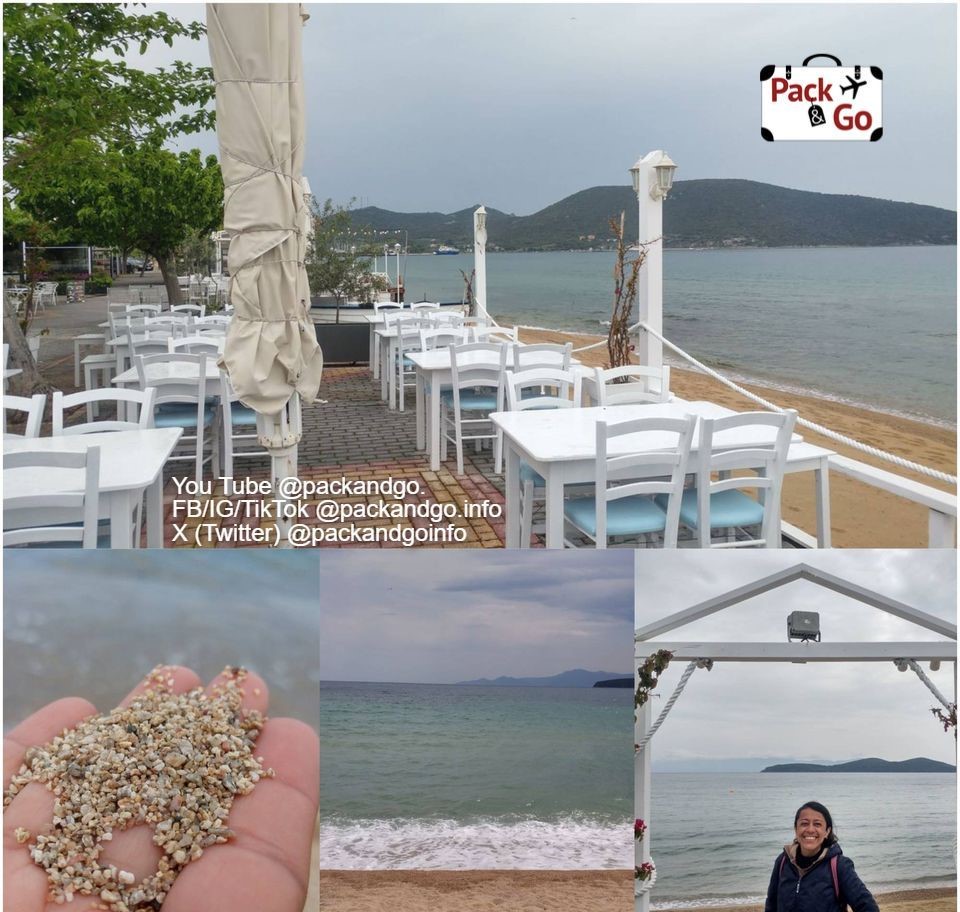
You can visit the castle of Anaktoroupolis and see its ruins (byzantine time). You can easily spot this attraction from the Nea Peramos beach. The ruins are exactly on the top of a slope leading towards the sea.
Go to Thasos Island
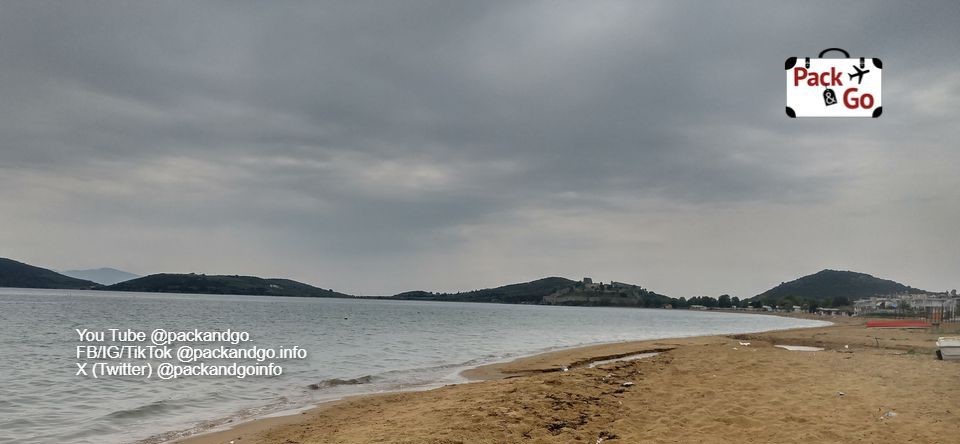
Being at Nea Peramos will put you in front of a hard-to-resist temptation: Thasos Island. There is a port in the town and locals told us they have been asking to reopen the ferry route Nea Peramos-Thasos that once operated. If you are lucky and the port opens and operates this route again, you could have a great choice right in front of you.
How long to stay in Nea Peramos?
A weekend, a week, and even more could be ok. Nea Peramos is another good place to mix days of only beach time, with days of a bit of effort. A perfect combination to recharge yourself and get back to your regular life.
Where is Ammolofoi Beach?
Ammolofoi Beach is located 26 km (33 minutes by driving) west of Kavala City center, based on Google’s calculation. And it is 5 km or 9 minutes away from Nea Peramos. It can take less, it depends on the exact part of Ammolofoi you visit. It is a long beach.
The KTEL bus we have been mentioning only reaches Nea Peramos. We were told that during high season, there are vans that take people from there to Ammolofoi but when we were (May 2023) there, this service was not available yet. We drove there.
What to do in Ammolofoi Beach?
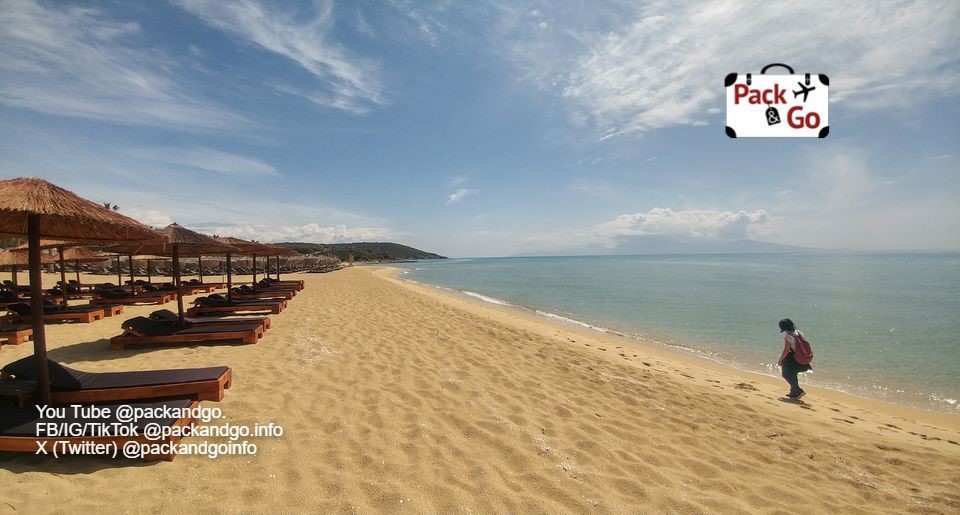
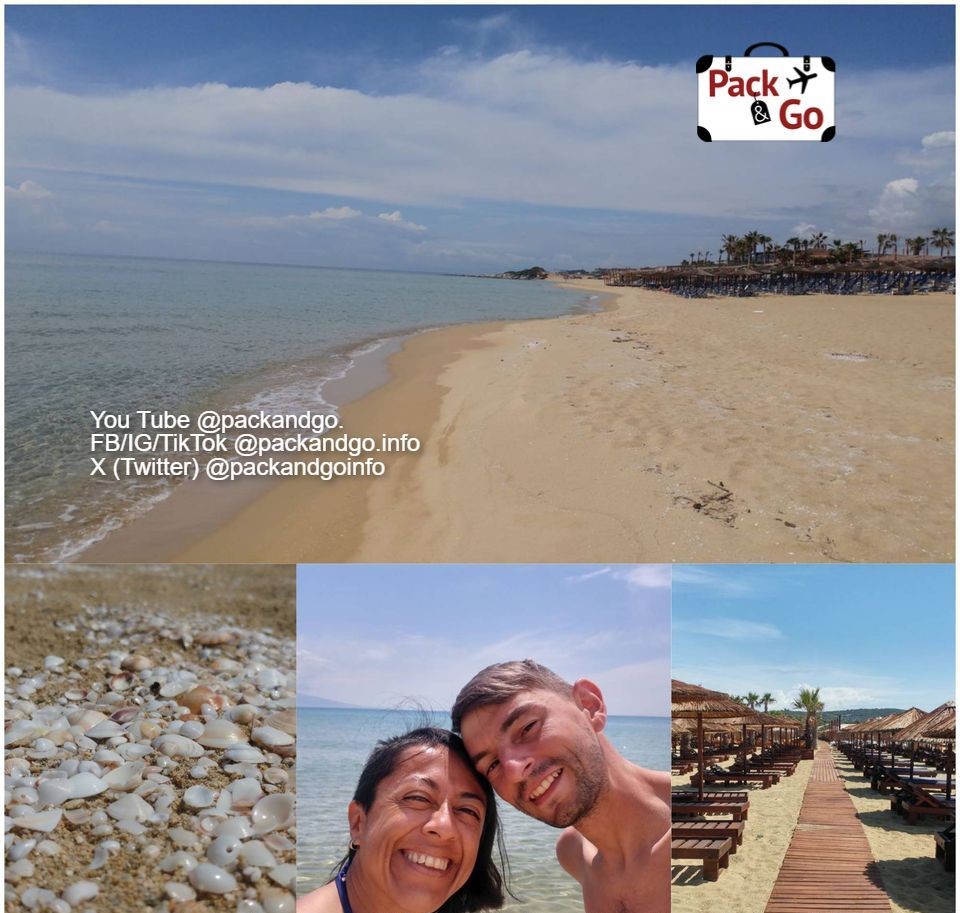
Greek people told us we must visit one of the best beaches near Kavala City, and of the complete Greece, and they were not kidding. So we went. Ammolofoi in Greek means “dunes”. It is a very wide and long beach, at least 3 km beach. There is not such a wide beach in the previous destinations we visited (Palio, Nea Iraklitsa, Nea Peramos). You will find some rocky spots that are used as a reference to divide and locate three areas known as first, second, and third Ammolofoi (from east to west).
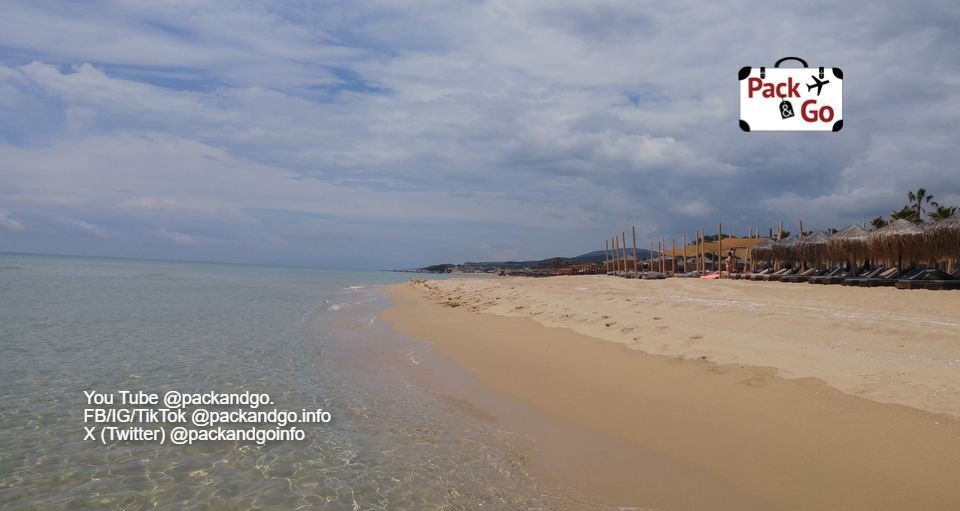
Thousands of tourists visit this beach every year to enjoy its clear and shallow waters, but also its party vibes. Yes, here you are on a different type of beach. While in the previous stops relaxation and quietness are the notes, people come to Ammolofoi to party, dance, drink, and have fun with other locals and tourists.
If you search on the Internet, Ammolofoi is truly considered one of the best beaches not only in the northern but in complete Greece. That is not minor if you consider the beauty in terms of beaches this country offers.
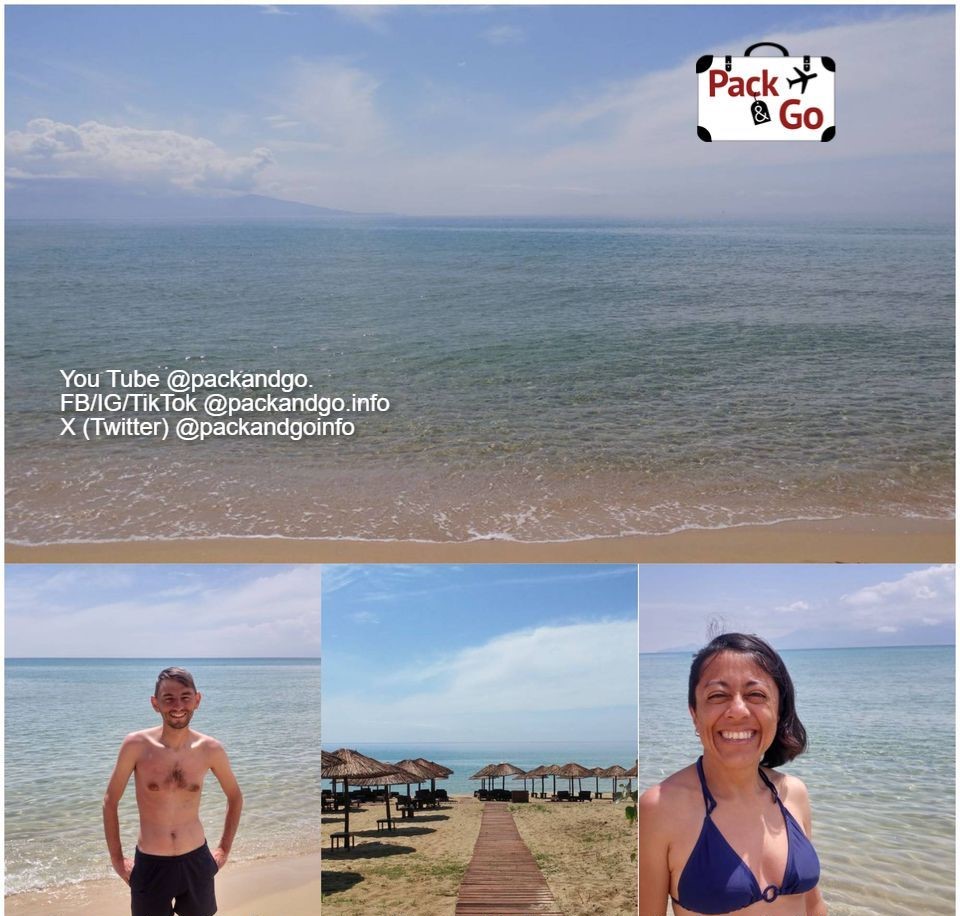
All along the beach, you can find beach bars providing tourists with umbrellas and sunbeds. You can swim, drink a coffee or another Greek beverage, and eat snacks and local dishes while having in the background the notes of electronic music and other rhythms to dance. In front of you, is the endless blue of the Aegean archipelago. When weather conditions collaborate, you can see from Ammolofoi, the island Thasos, and the mountain Athos (Halkidiki). If too much party is not for you, there are some quieter spots in Ammolofoi Beach. You only have to walk until you find your ideal place.
We visited Ammolofoi before the high season and it was not crowded, not so noisy, and very enjoyable. Please, do not visit Ammolofoi! Leave it like this, only for us!
How long to stay in Ammolofoi?
It depends on where you stay. We saw a campsite and several villas close to Ammolofoi Beach, but not many accommodation choices nearby (meaning walking distance). If you get a place exactly there you can stay as long as you feel like. But if you are staying in Nea Peramos or another town in the surroundings, you can go to Ammolofoi as many times as you want but that does not mean to literally stay there.
What else to do on the best beaches near Kavala City?
We recommend you what to do in every destination (Palio, Nea Iraklitsa, Nea Peramos, and Ammolofoi Beach), but if you have time to go further, you can go to some interesting attractions like:
Explore Alistrati Cave
This is a large cave, 3 km long, full of stalagmites and stalactites. From Palio, Nea Iraklitsa, Nea Peramos, and Ammolofoi Beach, it will take you approximately one hour and twenty minutes (maximum) to reach the Alistrati Cave.
Visit Ancient Philippi
If you did not visit Philippi while staying in Kavala, you still can do it from these destinations. You will be 30 km (30 minutes) away as a maximum. Ancient Philippi is a UNESCO World Heritage Site. You can visit the theater, Roman forum, basilicas, and more remnants from Roman and Byzantine times.
Hike the Pangaion Mountain
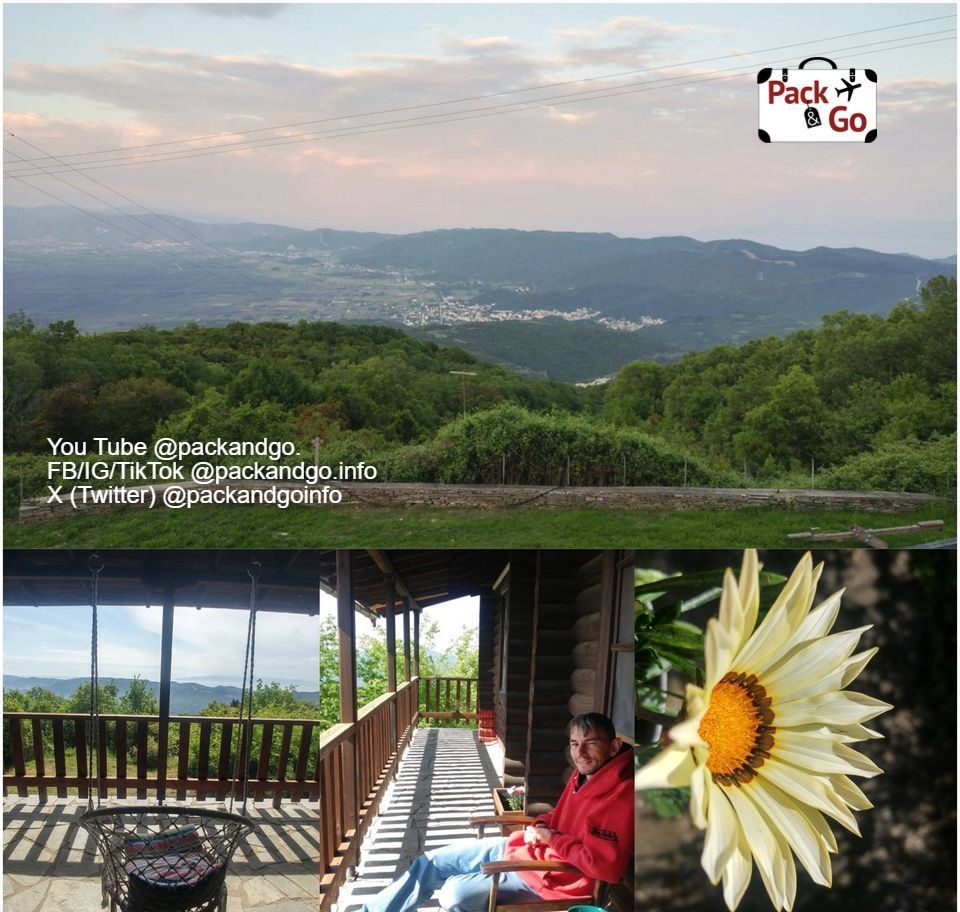
Pangaion Mountain is approximately 40 km from Kavala. From Palio, Nea Iraklitsa, Nea Peramos, or Ammolofoi the distance is pretty similar or a little bit less. The highest peak (Koutra) is 1,956 m. Climb it and discover its great views and nature, and have a look from the top to the Aegean Sea. If Pangaion conquers you, there is a very cozy place where you can spend the night or more days. Pangeo Forest Village is 10.93 km from Pangaion Hills. Ask for Eleftherios, he runs the place and you can have the best time there following his recommendations and chatting about Greek history.
Visit Drama
Drama City is another choice if you want to combine your beach holiday with some history and even a wine tour. You can drive to Drama and it will take you from 40 to 50 km (one hour approximately) to reach it.
Explore Kavala
We started our exploration in Kavala (east to west), but if you arrive in northern Greece from west to east, you can visit Kavala, its historic old town, the fortress, port, etc.
Please, do not visit the beaches near Kavala City!
If you have been to the most popular Greek destinations, you know how is to be in a paradise fully packed with tourists every year. For us, to be smashed with others like canned sardines is nightmarish.
The Northern part of Greece has been a very pleasant experience because it is beautiful and it is like a hidden paradise kind of reserved mostly for Balkan visitors. There are tourists of course, but not the crazy figures Athens, Santorini, or Mykonos register.
Seriously, do not visit the beaches near Kavala City! Leave them for us! It is fantastic not to share the beauty of these beaches with others.
Conclusion
Greece is a country you should explore as much as you can. All your senses will deeply appreciate the constant repetition of the experience. Follow our adventure and let's explore together the next stop!
| Follow PackAndGo.info at: | |
| YouTube | @packandgo. |
| @packandgo.info | |
| X | @packandgoinfo |
| Bluesky | @packandgo.bsky.social |
| @packandgo.info | |
| TikTok | @packandgo.info |
Check more interesting articles about Greece:
Why do young people dislike Kavala?
It is official, Fanari has been occupied by Bulgaria!
Kardzali is a hotspot for Turkish and Greek tourists, but not Bulgarian. Why?!
The Mexican sombrero is an experience everybody should try!
- Details
- Written by: Martin Pramatarov
- Hits: 8691
When I visited Mexico for the first time, I had a very exciting, maybe childish, objective. I really wanted to wear a real Mexican sombrero!
I have seen it everywhere! It’s a fun accessory that can appear in bars or costume parties. If you like sports and Mexicans are participating, it’s very easy to spot their supporters. No matter the size of the stadium or venue, Mexican sombreros can’t be unnoticed.
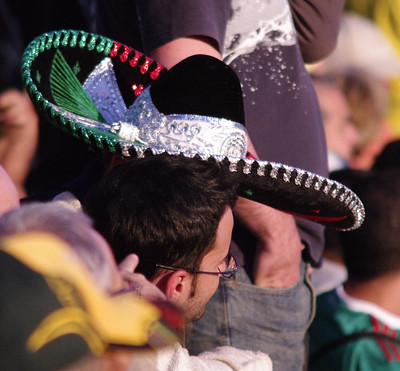
Once in Mexico, I could see different Mexican sombrero styles, from cheap ones to some really refined and expensive ones with handmade embroidery. I also discovered interesting facts about this popular accessory that I will share with you!
Share your travel experiences with us! Packandgo.info
| Follow PackAndGo.info at: | |
| YouTube | @packandgo. |
| @packandgo.info | |
| X | @packandgoinfo |
| Bluesky | @packandgo.bsky.social |
| @packandgo.info | |
| TikTok | @packandgo.info |
What is the origin of the hat?
This is very interesting because the hat seems not to have a specific origin. It was not a brilliant idea of someone, but a brilliant idea of different people around the world. Hat’s creation was motivated by a simple and clear reason: hot weather. People living in really hot places felt the need to protect their heads and faces to avoid insolation and sunburns.
It’s clear hats were created a long time ago. Some early hats were traced in Ancient Egypt, the Roman Empire, and the Middle Ages. And after time, it became a fashion and a popular accessory worldwide.

Is sombrero Mexican?
Yes, the sombrero is Mexican, at least what we know now as the Mexican sombrero. But historians mention there’s a direct Spanish influence on it. First of all, the origin of the name sombrero it’s absolutely Spanish. It comes from the Spanish word sombra (shade), and it started being used in the 15th century. It’s a fact, Spanish was not the native language in Mexico.
Talking about the hat, it’s documented that there was a wide-brim hat in Andalucía, Navarra, and Salamanca. In the first two regions, it seemed to be an accessory for wealthy landowners. And in Salamanca, it was part of the horse rider outfit. When Spanish conquerors arrived in Mexico, for sure the use of the sombrero also did.
An own Mexican sombrero was created in Central Mexico and used by Mestizo cowboys. And then, it spread around the rest of the country.
The exact origin of the Mexican hat has been the subject of debate. Some recognize it as a Mexican creation. Others attribute their origin directly to Spain, even though the differences between the mentioned Spanish hats and the Mexican hat are visible.
What is a Mexican sombrero?
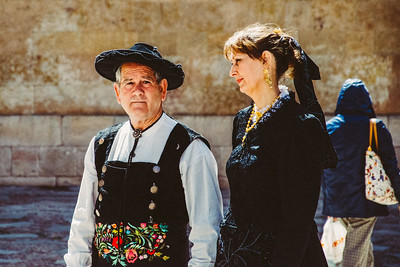
Mexican sombrero is sombrero de “charro” - a big, sometimes even massive, circular hat. This sombrero type has become a Mexican symbol, part of the folklore and culture of the country.
Historically and nowadays, Mexicans have worn different types of hats. Mexico is a big country. The hat’s design (style) varies based on the part of the country where you are. Materials, short or high crowns, narrow or wider brims are different.
But when people say Mexican sombrero, usually they mean the traditional and popular sombrero de “charro”. This is exactly the kind of hat that Mexican cowboys, horse riders, and mariachis wear.
Charro in Mexico refers to horse riders or cowboys who traditionally worked with livestock in the “haciendas” or ranches. Their outfit became popular and easy to spot. Tight-fit pants, belt, short jacket or only “sarape”, vest, wide bow tie, boots, and sombrero (hat). Ornaments, quality materials, and colors on “charros” suits were different based on the “hacienda” they came from.
By the way, now I know that when the hat is massive, the reason is that you didn’t get the proper size. The size of the ideal sombrero for you is defined by the head measures and the height of the person who will wear it.
How is a Mexican sombrero (de charro)?
The Mexican sombrero or “charro” hat varies based on the geographical location you are in. In the North of Mexico, where you find some of the driest areas, sombrero’s materials are lighter, cooler, and the brim is wider. This changes if you are in wooded areas, and in the South, where humidity is higher.
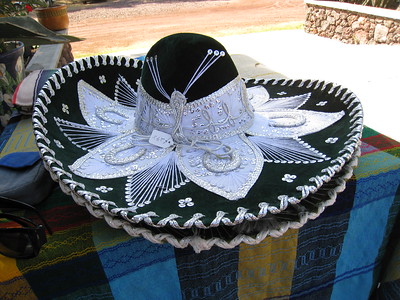
Therefore, a sombrero can be made of palm, wheat straw, wool, leather, suede, or rabbit hair. Materials must be balanced to make the sombrero a solid piece that can stand on the user’s head. It’s a wide-brimmed hat, raised at the back. Its crown can be flat, but usually, it’s shaped with several creases, called “pedradas” in Spanish (frequently four) to provide resistance to the sombrero in case of an impact (mostly falls).
Ornaments are an important detail and usually vary based on personal taste. The most refined sombreros have embroidered designs. Flower figures are usually the most preferred design. Sombreros can have “toquillas”, ornaments placed around the cylinder that shapes the crown, mostly in the lower part. They can be made of chiffon, ribbon, etc. “Ribetes” are also included, narrow strips or trims (ribbon, lace, etc.) to reinforce and adorn the edge of the sombrero. They can be embroidered or openwork trims.

Why should I wear a Mexican sombrero?
You definitely should wear a Mexican sombrero to have fun! That was absolutely my case. It feels rare at the beginning, especially if you are not a regular hat user like me. But it totally gives an accent, a unique touch to your image.
Besides, you should wear a Mexican sombrero because of its benefits. Its wide brim protects you from the sun, wind, dust, and rain. Whether you walk or you ride, you can be protected while keeping your hands free! That’s better than holding an umbrella. It means protection for your head, a sort of helmet, in case of impact (stones, tree branches, or falls).
And if you have seen old Mexican movies, you know a sombrero can be very useful for different purposes.
- To stir up the fire of a bonfire.
- To collect water for drinking yourself or sharing it with your horse.
- To play and dodge a bull pretending you are a bullfighter.
- To use it as a shield in case of a fight or a knife attack. It will be a one-shot resource, but still, it can save you.
- To protect (cover) your identity.
- To kiss your loved one, avoiding prying eyes with the wide brim.
Charros seemed to be very creative in taking full advantage of their sombrero!
In any case, the Mexican sombrero is an experience everybody should try! Don’t miss it on your next trip to Mexico.
Share your pics and experience with us, packandgo.info.
| Follow PackAndGo.info at: | |
| YouTube | @packandgo. |
| @packandgo.info | |
| X | @packandgoinfo |
| Bluesky | @packandgo.bsky.social |
| @packandgo.info | |
| TikTok | @packandgo.info |
The best waterfalls near Veliko Tarnovo (Bulgaria) you must visit!
- Details
- Written by: Gianna Esquivel
- Hits: 7573
Guys, Bulgaria is a gem you should explore at least once! This time we are in its north-central part. To give you a clue about our current location, we are close to the famous Veliko Tarnovo. That’s easy to spot on the map. It’s a town that is totally worth a visit. But this time, we want to talk to you about the beautiful waterfalls that you can see around Veliko Tarnovo. Either if you go directly there or if you are around, keep them in mind.
That’s our case, we are heading to the Bulgarian border city called Vidin. But we don’t have an exact date to reach it so we are going slowly to see more interesting things around. Like waterfalls! We love waterfalls and nature in general so here you have 5 waterfalls near Veliko Tarnovo you must visit!
| Follow PackAndGo.info at: | |
| YouTube | @packandgo. |
| @packandgo.info | |
| X | @packandgoinfo |
| Bluesky | @packandgo.bsky.social |
| @packandgo.info | |
| TikTok | @packandgo.info |
1. Zlaten waterfall (Златен водопад), 65km away
Our first waterfall during this trip was Zlaten. It’s 65 kilometers east of Veliko Tarnovo. The name Zlaten means golden, and it comes from the color of the stones. They are a golden color and you can see small twinkling stones in the river, that look like the precious metal.
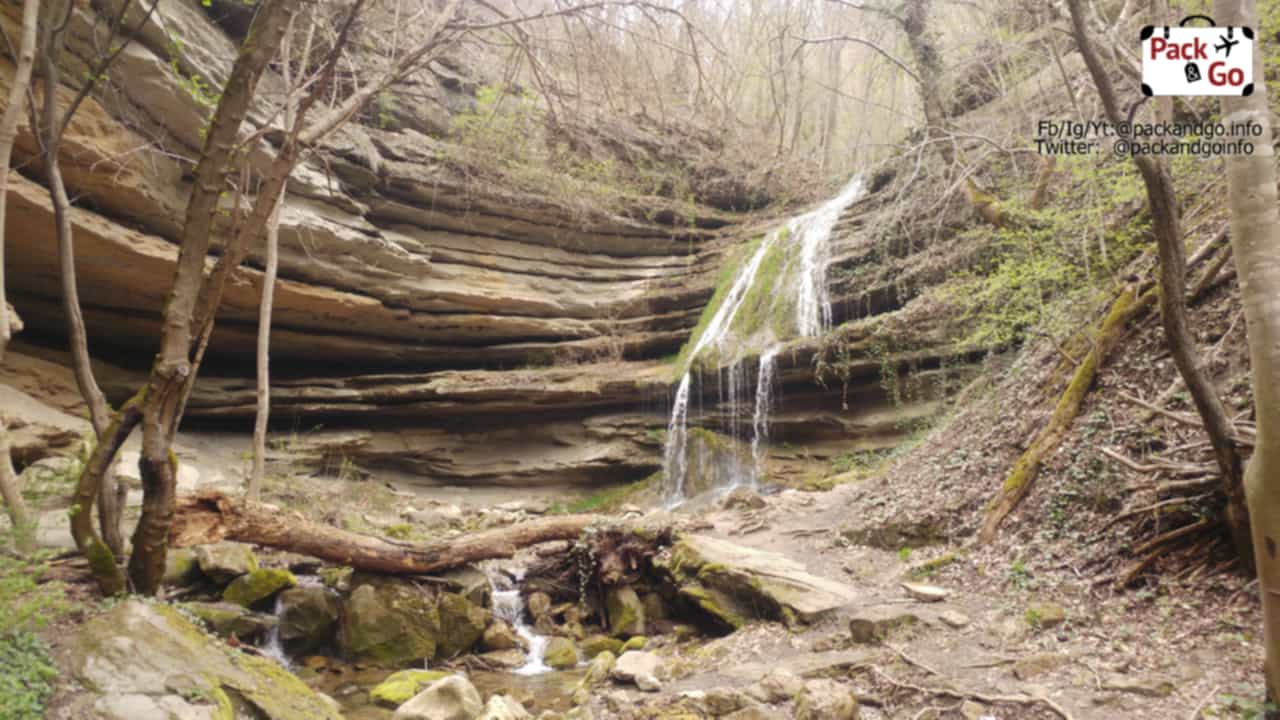
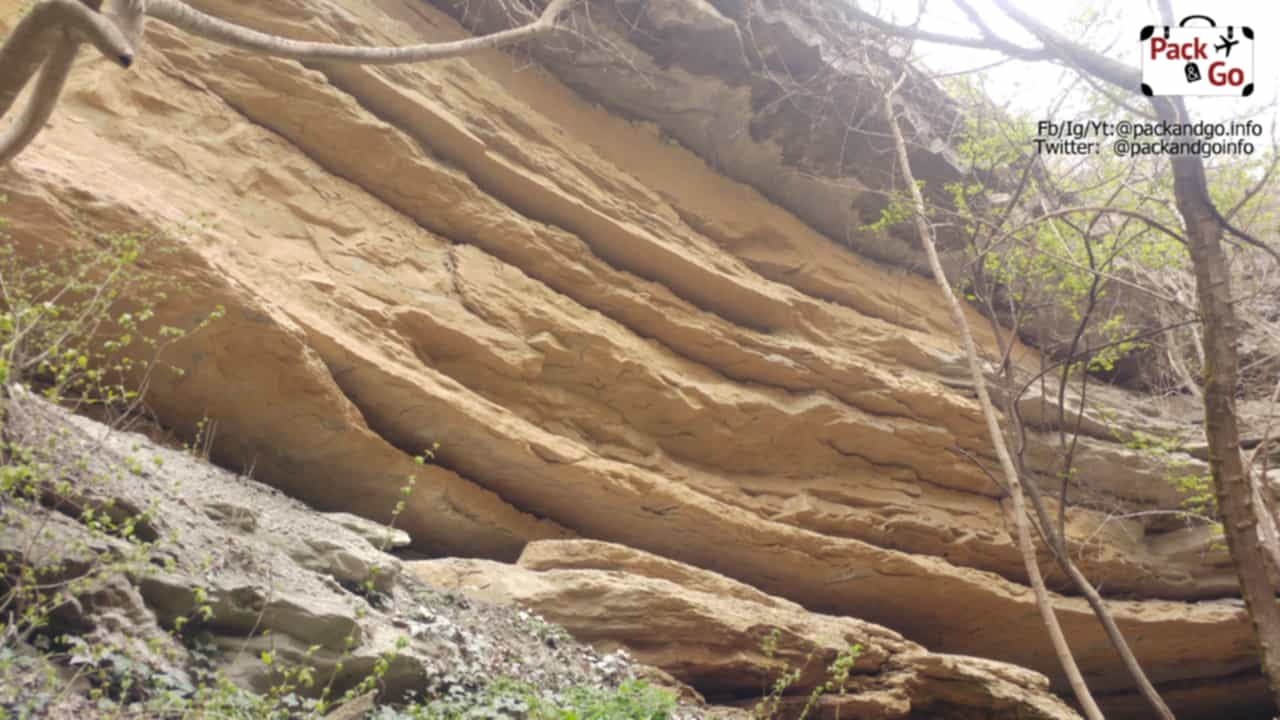
The trail is not hard and immerses you in a cool, natural place. When we arrived, the current in the channel was strong. We walked along with it, passing through a camping site, BBQ area, and spaces designed for kids and adults to have fun in nature.
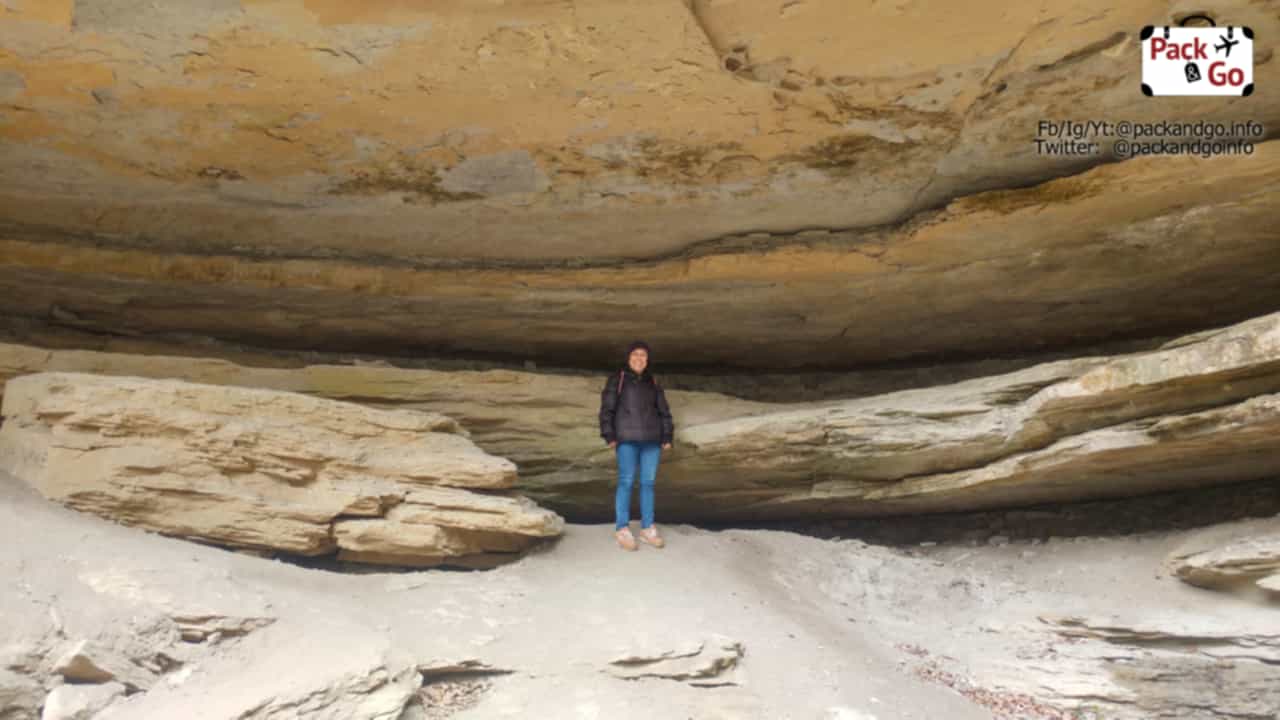
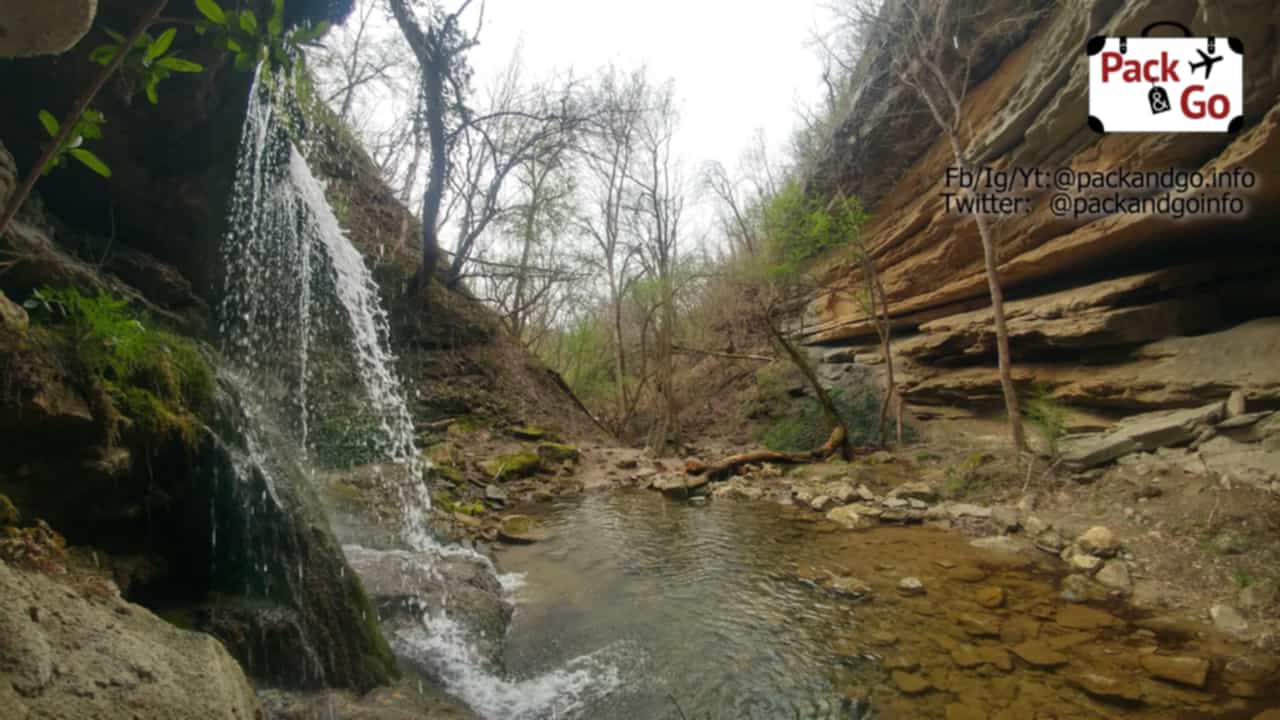
Soon, we were in front of the waterfall. It was not the highest, but it was pretty and the surroundings were quiet and enjoyable. The place is ideal for spending a day alone, with friends, or with family. When we arrived it was empty so it was easy to park exactly at the entrance. But the space does not look for many cars to park. Maybe during the high season, you should look for another parking spot.
2. Hotnitsa waterfall (Хотнишки водопад (Кая Бунар)), 20km away
The clue we got was that the waterfall was close to Hotnitsa village. So we drove directly to this village and yes, from there it’s easy to reach the waterfall. We parked a bit after the waterfall because there is a small parking lot. You can leave your car safer there and then walk. It’s not a long distance. So we did and soon we were walking on a well-marked road heading to the waterfall. We were just a few meters from the highway, but everything got different here. Nature is all over! We love nature so we were in the right place. We kept going and suddenly, we saw it! Hotnitsa waterfall is very beautiful! Our eyes were amazed by the emerald color of the water. Someone told us it may be produced by limestone deposits in the rocks. Well, what we can say for sure is that it’s a beautiful waterfall!
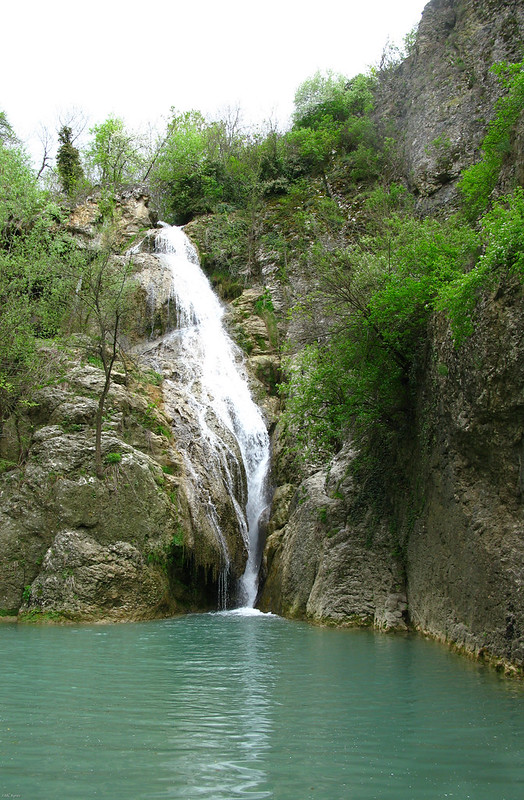
It’s 30 meters in height and if you visit it in the right season (Spring or the beginning of Summer), you will see, like we did, a great and strong waterfall. It’s fed by the Bohot river. The trail is not very challenging. It’s something like a kilometer and a half. Walking there is a very relaxing experience. You can enjoy the views and surroundings.
Don’t be confused, the waterfall is also called Kaya Bunar (spring in the rock) and it’s 20 kilometers north of Veliko Tarnovo. We have to say that the signs are written in Bulgarian. But still, is not hard to find the place.
3. Kartala waterfalls (Карталските водопади), 6.2km
The Kartala waterfalls are maybe the easiest to visit if you are staying in Veliko Tarnovo. They are just 6km away from it! So close, that you can go by walking from Veliko Tarnovo to Kartala waterfalls in less than 2 hours. What is so great about visiting these waterfalls is that you will be able to enjoy many beautiful views of Veliko Tarnovo on the way. You can see the Tsarevets fortress, which is a magnificent memory of medieval Bulgaria.
The old name of the main waterfall from the Kartala waterfalls is Kartal bayr, which, translated from Turkish, means Eagle Peak. We didn’t see any eagles, but you might have luck when you pass through there.
The trek is not very well marked, but at least it is very close, so you probably won’t get lost. You will see some marks on the trees, and occasionally some picnic spots, which will show you are on the right track.
The waterfall is around 8 meters high. It is not enormous, but it is a nice ending to the trek.
4. Momin Skok waterfall a.k.a. Emen waterfall (Водопадът „Момин скок“), 25km away
The Momin Skok waterfall is located near the Emen village and this is why many people know it as Emen waterfall.
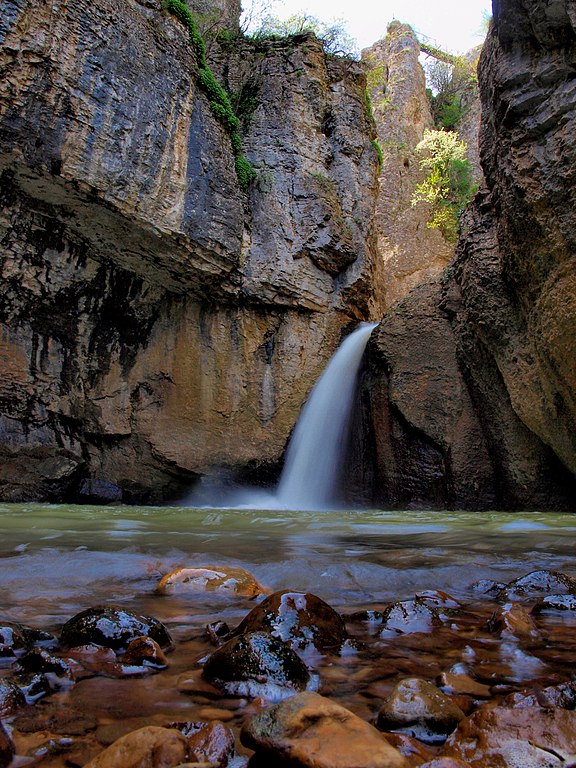
The name Momin Skok comes from a legend from the time of the Turkish occupation. The legend says that the Turkish military was collecting all the young women from the Bulgarian villages and bringing them to the harem of the sultan. The women from Emen didn’t want to join the harem, and they ran out of the village. The Turks were just behind them when they arrived at the waterfall. In a desperate move, they decided that they would rather jump and die than let the Turks catch them. They jumped and died together. This is why it is called Momin Skok. Momim means girls’, and Skok means a jump.
The waterfall is at the end of a beautiful canyon called Emen Canyon. The trek starts with a small cave. Then you will enjoy 50-meter-high cliffs on the two sides of the Negovanka River. The place is really picturesque. Just watch out, because it is a bit high. Take proper trekking shoes.
We totally enjoyed the trek. In the end, you see the 10-meter-high Momin Skok waterfall. It lands in a wide pool, which, if it is warm enough, you can swim in. The place really invites you to jump into the water.
5. Pirineshki Dzhendem waterfall (Пиринешки Джендем водопад), 62 km away
Pirineshki Dzhendem! The name is super hard to say, but it is really worth visiting. Especially if you are already near the Zlaten waterfall. It is just a few kilometers away!
It was easy to park near the road and walk to the waterfall. It was a super short trek of fewer than 10 minutes.
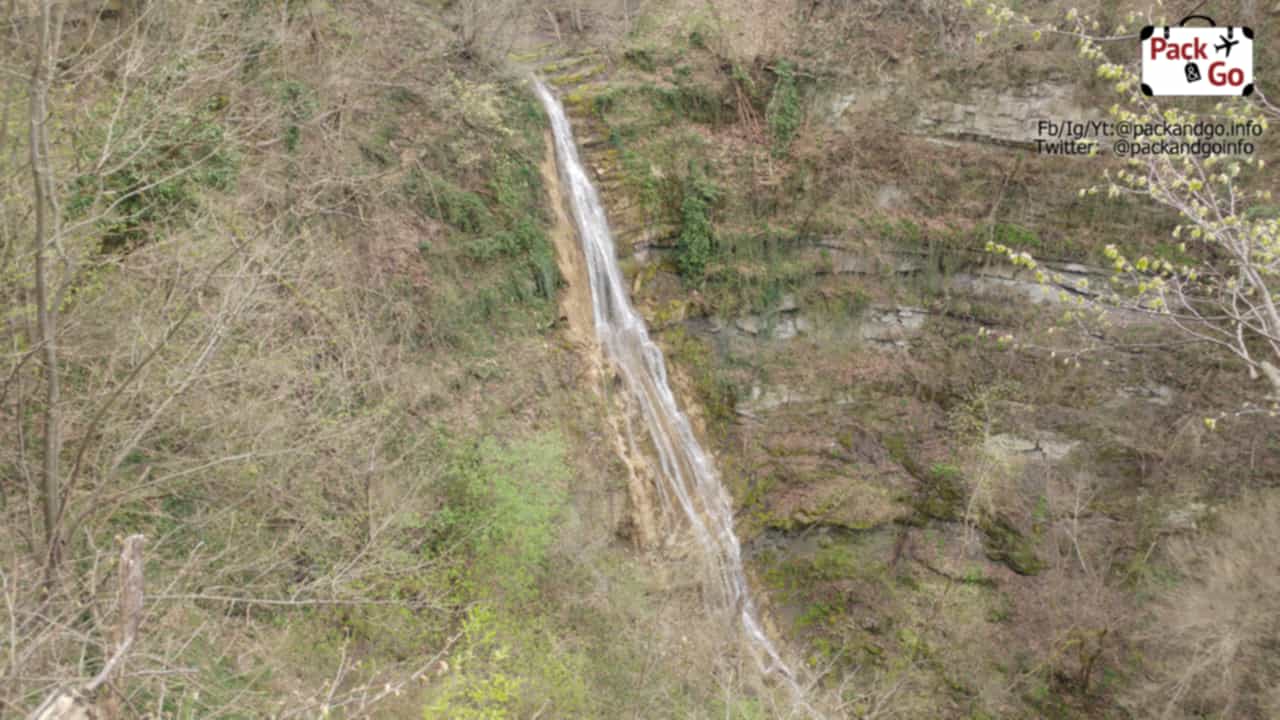
We were surprised to see such a high waterfall. The Pirineshki Dzendem waterfall is 34 meters high! It is among the highest in North Bulgaria.
On the way back, we had a picnic in the so-called “bivak”, the place for rest at the beginning of the trail. It was really nice to visit Pirineshki Dzhendem and Zlaten waterfalls, one after the other. They were two very different waterfalls, both amazing!
Conclusion.
Guys, this is just the beginning of our trip, and it’s getting really interesting and fun. Follow us and enjoy our next stops. If you are on a holiday, have a safe travel. If you are still at home, just pack and go!
We started in Varna and these waterfalls were first on the list. We are now heading towards Dryanovo. Then Etar, then Lovech, and more interesting destinations in North Bulgaria and Romania, on the way to Budapest (Hungary). Join our trip here on packandgo.info
Follow us on:
| Follow PackAndGo.info at: | |
| YouTube | @packandgo. |
| @packandgo.info | |
| X | @packandgoinfo |
| Bluesky | @packandgo.bsky.social |
| @packandgo.info | |
| TikTok | @packandgo.info |
Keramoti: The Beach Town You’re Not Visiting—And It’s Better Than Santorini!
- Details
- Written by: Gianna Esquivel
- Hits: 6766
Previously in Pack and Go: we have just finished our adventure in Thasos. We took the ferry to get back to the mainland, and there, we had a second encounter with Keramoti. We were there for the first time only to take the ferry and go to Thassos. This time, when we dropped by there, we decided to stay for a few days to explore the town! Most people reach Keramoti only to board the ferry, but is it worth a visit? Let’s find it out!
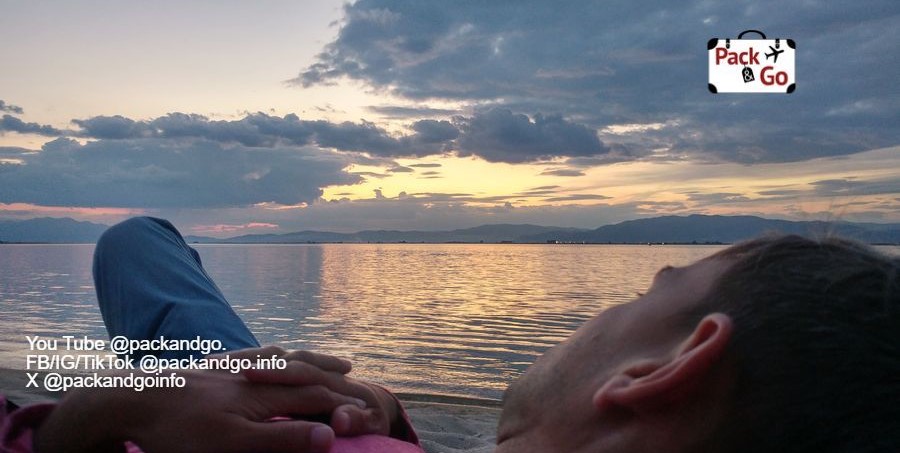
Where is Keramoti?
Keramoti is a small town located in the Eastern Macedonia and Thrace region of northern Greece. Get a map and search for it! Keramoti is positioned on a little sort of peninsula or promontory, near the Nestos River Delta, and is surrounded by lush landscapes, and a wide and long sandy beach bordered by pine groves. It serves as a gateway to the natural wonders of this region.
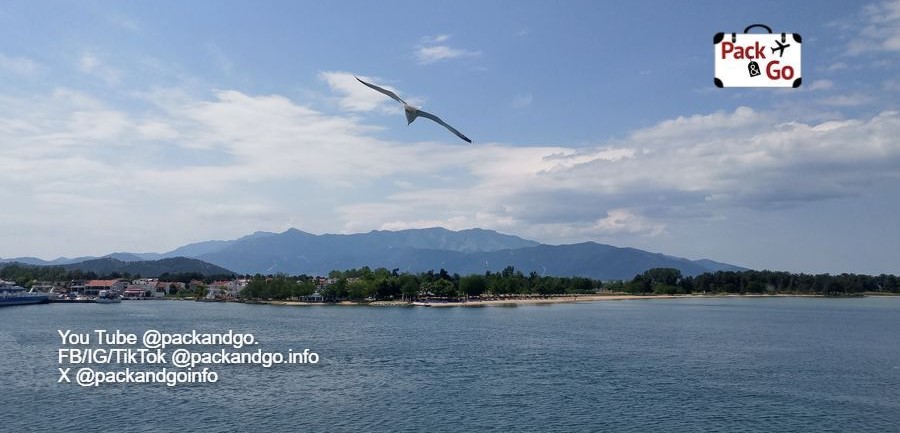
Its strategic location, sitting along the Thracian Sea directly opposite the island of Thassos, makes it an essential hub for ferries traveling to Thassos. However, it also offers a peaceful retreat from the crowds of Greece’s more famous destinations.
How to reach Keramoti?
Getting to Keramoti is straightforward, thanks to its proximity to major cities and transportation networks. The most viable option for you will depend on where you come from.
By Air
The nearest airport is Kavala International Airport "Megas Alexandros" (KVA), just 12 kilometers away. Flights connect to Athens and some European cities. From the airport, you can take a bus to Kavala City, where you can take a second bus to Keramoti. Other choices -more expensive and faster- are available: taxis, private transfers, or rental cars. It is up to you.
By Ferry
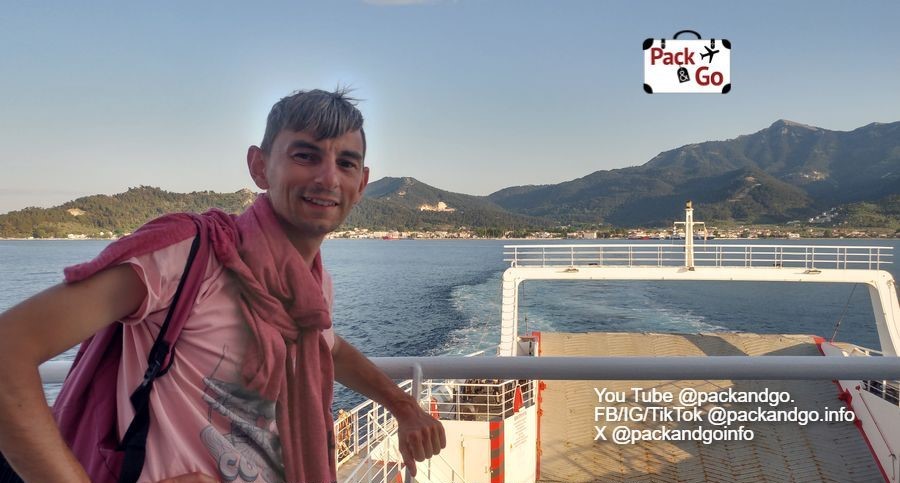
If you are coming from Thassos, ferries connect Keramoti to the island’s port in Limenas. The journey is short, lasting around 35 minutes, with frequent departures throughout the day.
By Public Transport
Local buses from Kavala and Xanthi connect to Keramoti, only ensure you check the available schedules.
By Car
This time, this was our choice. We are driving. Based on Google’s calculations:
From Kavala City, Keramoti is about 40 kilometers east of Kavala, accessible via Egnatia Odos/A2/E90. The ride should take approximately 40 minutes.
From Thessaloniki, it takes 200 kilometers, so around 2 hours and 30 minutes.
What is the origin of the name Keramoti?
Keramoti is derived from the Greek word "keramos," meaning clay or pottery. Historically, the region was known for its clay-rich soil, which was used in pottery and ceramics. This connection to natural resources hints at the village’s humble origins as a place of craft and industry.
| Follow PackAndGo.info at: | |
| YouTube | @packandgo. |
| @packandgo.info | |
| X | @packandgoinfo |
| @packandgo.info | |
| Bluesky | @packandgo.bsky.social |
| TikTok | @packandgo.info |
A Short History of Keramoti
Keramoti has a modest history compared to Greece’s ancient cities. Originally a fishing village of Greek immigrants from Asia Minor, it grew due to its location near the Nestos River Delta, a fertile area that supported agriculture and trade. Over time, the village became a small port, connecting mainland Greece with Thassos.
While Keramoti lacks grand historical monuments, it offers a glimpse into the evolution of a traditional Greek coastal village, untouched by the rapid tourism development seen in other areas.
Can you stay in Keramoti, or is it only a port?
Contrary to its reputation as only a ferry hub, Keramoti is a cool place to stay. The village offers from cozy family-run guesthouses to apartments and small hotels. Staying in Keramoti allows visitors to enjoy its tranquil beaches, authentic Greek cuisine, and natural surroundings without the rush of larger tourist destinations. Besides, you can easily visit Thasos, Kavala City, and other beautiful surroundings from here.
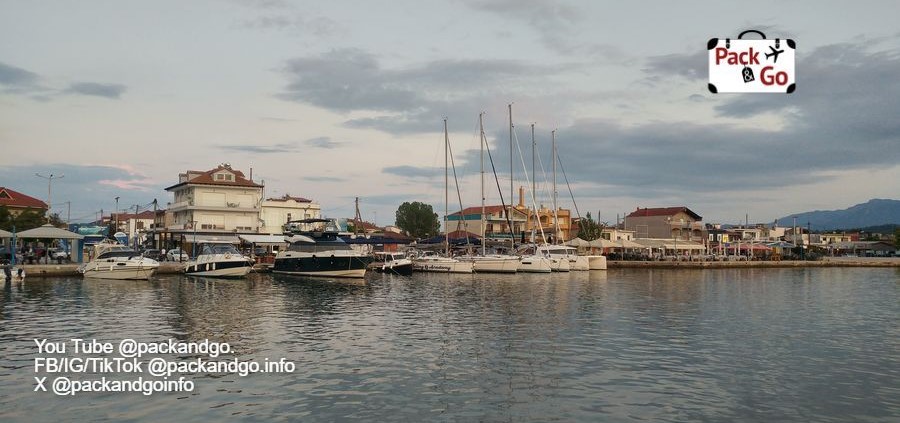
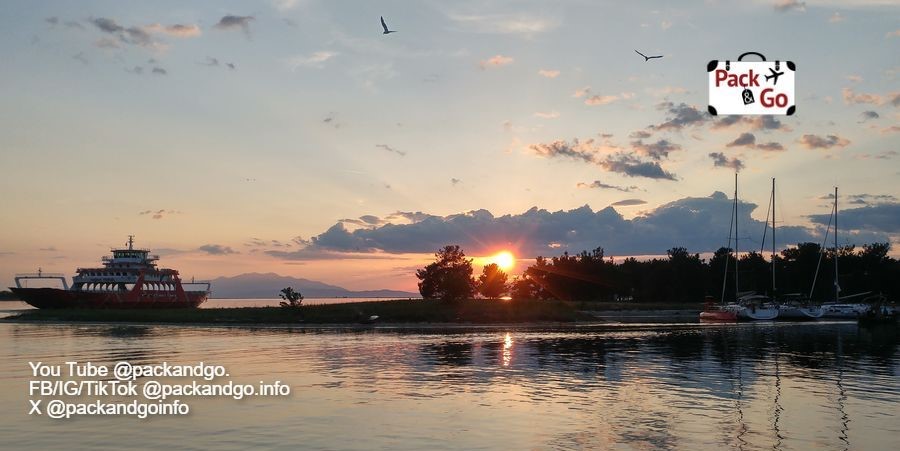
Our decision to stay in Keramoti was made beforehand, but exactly as we were getting off the ferry, a cute sunset greeted us and confirmed that decision! Sunsets in Greece are something you should enjoy at least once in your life!
What to do in Keramoti, Greece?
Being in a village, we knew that simplicity was key to understanding the available activities there. The first afternoon in Keramoti we easily found the apartment we rented and walked around the town to have a night view and enjoy local food and drinks. The next four days, our holiday routine added activities like the following.
Relax on pristine beaches
If you have followed our adventure in Greece, you already know that enjoying the Greek beaches has fascinated us! It has become our favorite activity. We have already visited many beaches and we still crave more!
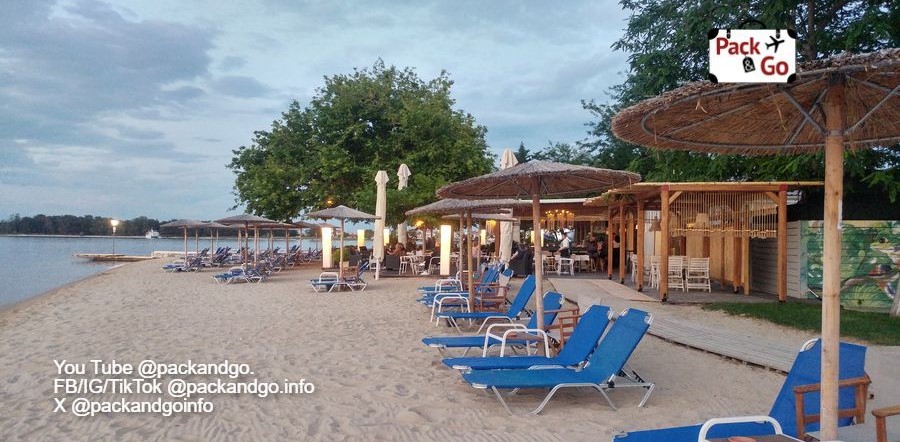
Keramoti’s sandy and wide beach stretches for kilometers, offering calm, shallow waters ideal for solo travelers, couples, and families looking for relaxation in a quiet environment. The beach was not crowded during our visit (beginning of June), making it perfect for sunbathing, swimming, and unwinding. Beach bars provide sun loungers, umbrellas, and refreshments, blending relaxation with convenience.
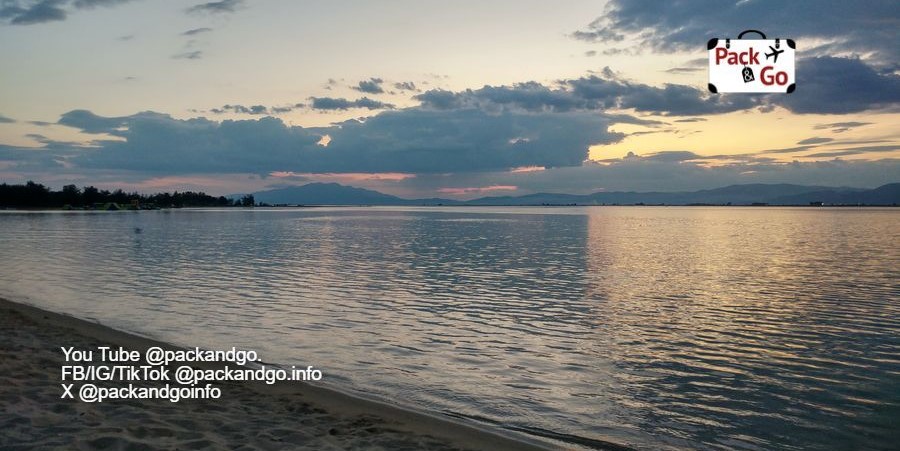
Keramoti offers you cool options to balance between calm beach areas where you can only hear the sea waves (the more remote) and others where you can enjoy music, a conversation with locals or other tourists, and some drinks. Still, it is not a noisy or party destination. Fortunately for us!
Fishing and boating
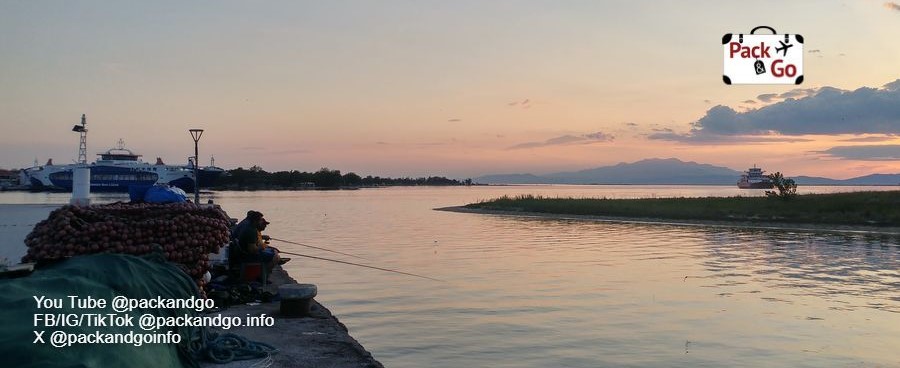
Keramoti remains a fishing village at heart. You can join locals for fishing excursions or rent a small boat to explore nearby waters. Greeks are really friendly and talkative. If you want to get the best out of staying in Keramoti, forget shyness and talk with them. Locals have the best advice to make your holidays more fun and to indulge your belly and complete senses with the most delicious choices, like the fresh fish they catch.
Explore the Nestos River Delta
If you are a nature enthusiast, you can take guided tours of the Nestos River Delta, a protected wetland area rich in wildlife and rare birds. Kayaking, canoeing, and hiking are popular ways to explore this ecological haven.
Try local cuisine
As you expected, seafood is a highlight in Keramoti. Visit local tavernas to enjoy fresh fish, octopus, and mussels caught daily. Pair your meal with a glass of ouzo or local wine for an authentic experience. This can become fast a hard-to-quit pleasure!
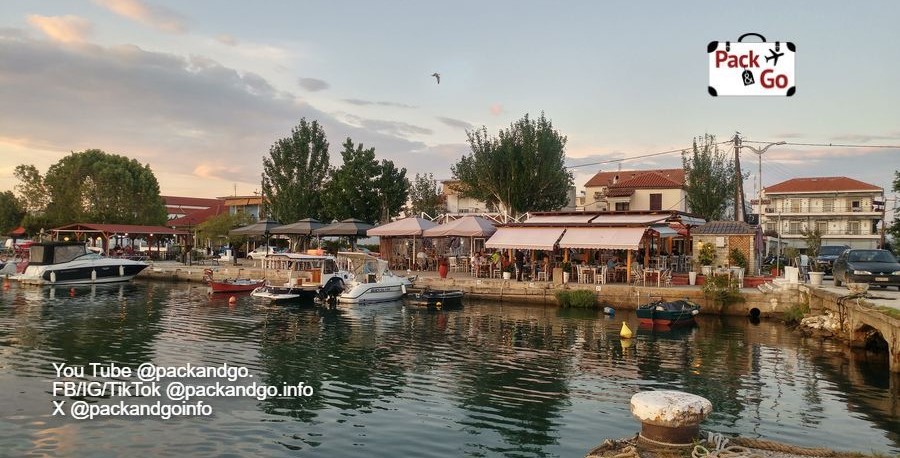
We realized that we have slowed down considerably our eating pace hahaha Being in Greece there is nothing like a hurry meal experience. Once you get a cool spot in a taverna, your eyes and thoughts can get lost in the views of the sea. You won’t realize the time passing until your nose gets hit with the luscious aromas of the meals arriving at your table. Bite by bite, sip by sip will come together in a harmonious symphony you won't want to end! And later on, a glass of ouzo and a coffee will follow perhaps, at the time a beautiful sunset announces you again the time you have been there. Guys, we absolutely recommend you come to Greece and try Greek cuisine!
Day trips to Thassos
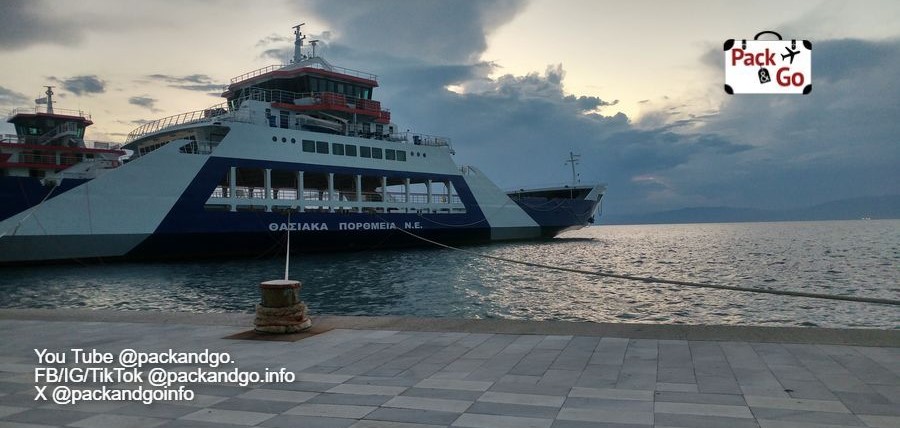
The ferry ride to Thassos makes for an excellent day trip or a whole week visiting the beautiful island. It really depends on the time you have. Thassos offers modest ancient ruins, vibrant villages, stunning beaches, and more. You can read about our adventure there! It was hard to leave Thasos! However, that led us to Keramoti and we are not exactly suffering here haha Keramoti is offering us an extra cool chapter for this trip. This town has everything you need to have a relaxing holiday.
Taking the ferry to go and get back from Thasos is easy because you are already at the port (Keramoti).
What to visit in Keramoti?
Keramoti might not have monumental landmarks, but it boasts natural and cultural attractions.
Keramoti Beach
The village’s main attraction, this beach is perfect for families and those seeking a peaceful seaside experience. As we said before, Keramoti’s sandy and wide beach stretches for kilometers. That ensures you will find your perfect spot.
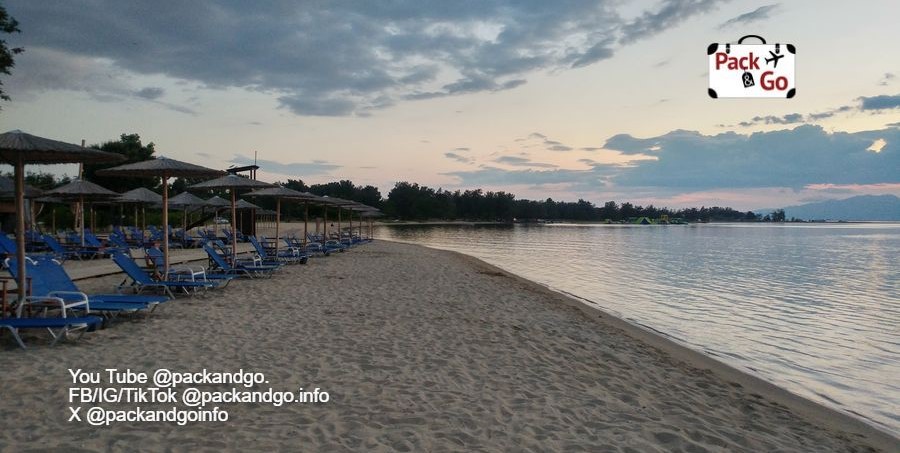
Here we share a fun fact. Many tourists told us they loved Greek beaches because of their nice sand, thrilling colors, and shallow waters. Some young couples mentioned that shallow and calm waters are perfect not to risk their young something kids' safety. Others agreed but added that the absence of strong currents and waves is also good for adults like them who don’t know how to swim! We laughed a bit because why not? Hahaha But it is true, many adults never get such a skill.
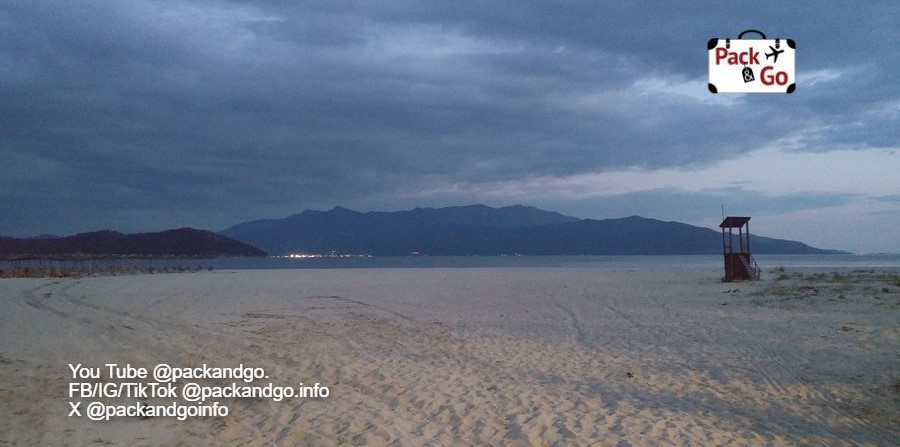
Guys, we strongly recommend you learn how to swim! It can save your life and make you enjoy your holidays at sea much more. Only wetting your feet or walking in the sand is very pleasurable, but diving a little deeper is another great pleasure you should experience. There are many beaches, rivers, and awesome waterfalls you could enjoy to hell if you can swim. And remember, it is life-saving!
Nestos River Delta
A UNESCO-recognized site, the delta is home to over 300 bird species, making it a paradise for birdwatchers and photographers. The scenic trails and observation points are ideal for eco-tourism.
| Follow PackAndGo.info at: | |
| YouTube | @packandgo. |
| @packandgo.info | |
| X | @packandgoinfo |
| Bluesky | @packandgo.bsky.social |
| @packandgo.info | |
| TikTok | @packandgo.info |
Nearby historical sites
While Keramoti doesn’t have ancient ruins, you can visit the Agios Nikolaos Church, a small but charming spot that reflects the village’s traditional character and religious heritage. If you search for bigger landmarks, nearby Kavala offers the Kamares Aqueduct, the Castle of Kavala, and the Archaeological Museum of Kavala. You easily can go by public transportation for a day trip Keramoti-Kavala-Keramoti. You can explore Kavala City through our experience there and see all that the city offers you.
Thassos Island is another good choice for you. Just a short ferry ride away you will find mostly beautiful nature and beaches such as Marble Beach and Paradise Beach. Ancient sites are modest, not the most spectacular in Greece, but they are easy to access. You can access the most complete guide of Thasos attractions in this article.
Is Keramoti worth a visit, or should you skip it?
We say “yes”, Keramoti is worth a visit. However, whether Keramoti is worth visiting depends on your travel preferences.
If you are looking for bustling nightlife, massive ancient ruins, or a cosmopolitan vibe, Keramoti may feel too quiet and not your choice. For travelers pressed for time and not planning to visit Thassos, it might not be a priority.
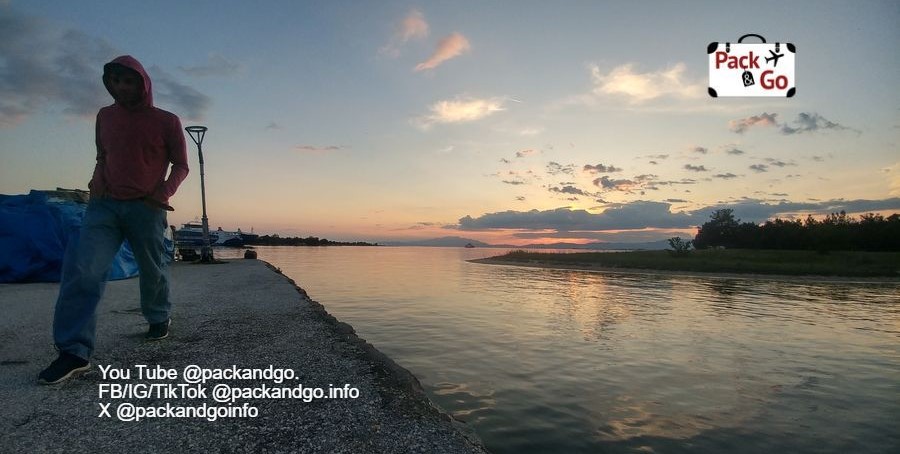
If you have the time and enjoy simplicity, such as quiet beaches, authentic Greek culture, and eco-tourism, Keramoti is a perfect fit. Its proximity to the Nestos River Delta and Thassos makes it an ideal base for exploring northern Greece.
For families or those seeking a peaceful retreat, Keramoti offers relaxation without the crowds.
Keramoti: The Beach Town You’re Not Visiting—And It’s Better Than Santorini!
- Undoubtedly, Santorini is a worldwide famous destination, renowned for its dramatic caldera views, iconic blue-domed churches, exclusive clubs, international cuisine options, vibrant nightlife for party-goers, and of course, very luxurious accommodations. However, it comes at the price of being a crowded and expensive destination, where the Greek essence has been diluted to satisfy the massively diverse tourists' expectations.
- In contrast, Keramoti is a quaint fishing village that remains off the radar for most international tourists. It is the perfect destination for those seeking an authentic Greek experience, far from the crowds and commercialized ambiance. If authenticity, natural beauty, and tranquility are factors you consider to pick a destination, Keramoti is a good choice.
- Unlike Santorini, Keramoti offers a genuine taste of local Greek life. You can easily enjoy freshly caught seafood at family-run tavernas and chat with friendly locals. It was very hard to find local food last time we were in Santorini. Pizza, pasta, and burgers were everywhere and prices for such foreign meals were really crazy.
- Santorini receives thousands, even millions of visitors every year and that obviously has an impact. Keramoti is a small town that still has more pristine, uncrowded beaches and lush surroundings.
- The town's relaxed vibe is perfect for those wanting a peaceful escape. It is also an opportunity to have conversations with locals. The pace in Santorini is fast and Greeks working there are too busy to chat.
- While prices in Santorini have gone to the roof in every aspect, Keramoti offers fair prices for accommodations, meals, and entertaining activities.
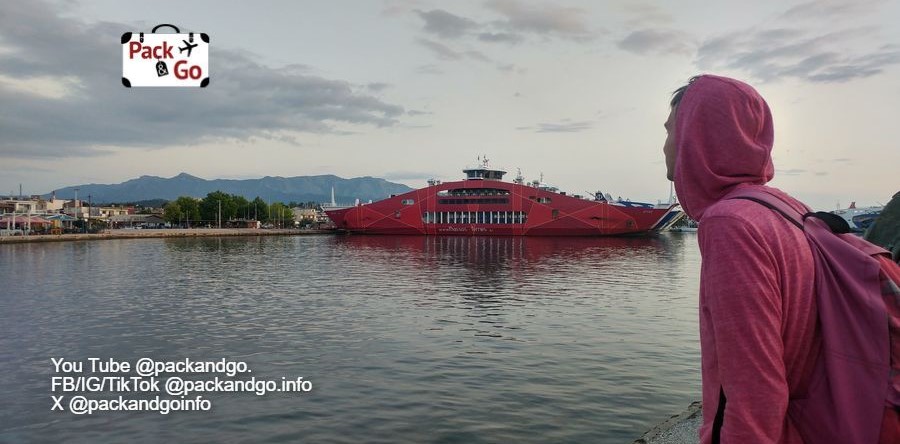
So, Keramoti is the beach town you’re not visiting only because it is not on the popular Greek destinations list. However, if you value simplicity, serenity, and authenticity, you should visit Keramoti and confirm that it is better than Santorini!
So, what is next? We are already heading back home. We have one more stop in Greece. Stay tuned and explore it with us! If you have a chance, just Pack and Go right now! We would love to follow your traveling adventures!
You may like to read also:
It is official, Fanari has been occupied by Bulgaria!
Please, do not visit the beaches near Kavala City!
Thasos, Greece: Don't Fall for the Hype! Read the Truth!
Page 1 of 6